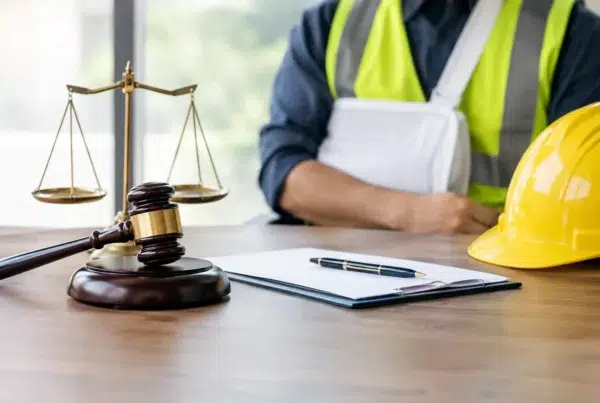

A workplace injury claim can start getting weaker within hours if the right evidence is not preserved. If you are trying to figure out how to document workplace injury evidence, the goal is simple: create a clear record of what happened, what caused it, and how the injury has affected your health and your ability to work.
That matters in any job injury case, but it is especially serious in Texas industries where incidents happen fast and conditions change even faster. In a refinery, plant, warehouse, construction site, or delivery route, equipment can be repaired, spills can be cleaned, and witnesses can scatter before you have had a chance to think straight. Evidence does not wait for you to feel better.
How to document workplace injury evidence right away
Start as soon as you can do so safely. Your health comes first. Get emergency care if you need it, but once the immediate danger has passed, begin preserving proof.
Take photos of the scene, your injuries, the equipment involved, any safety hazards, and anything that helps explain what happened. That may include broken ladders, missing guards, leaking chemicals, damaged flooring, poor lighting, lack of warning signs, or the position of vehicles and machinery. If your injuries change over time, continue taking photos in the days that follow. Bruising, swelling, burns, and surgical wounds often look different after 24 to 72 hours.
Write down what happened while the details are still fresh. Include the date, time, location, the task you were doing, who was present, what you saw before the injury, and what happened immediately afterward. Keep it factual. Do not guess about details you do not know. If you are unsure whether a machine had been serviced or whether a supervisor knew about a hazard, say that you do not know rather than filling in the gaps.
If you reported the injury verbally, make a written record of that too. Note who you told, when you told them, and what their response was. Many injured workers assume the employer will make a complete report. Sometimes that happens. Sometimes the report is incomplete, inaccurate, or framed in a way that shifts blame to the worker.
The evidence that can make or break a claim
The strongest workplace injury cases are usually supported by multiple forms of evidence that tell the same story from different angles.
Medical records are one of the most important pieces. Get evaluated promptly and describe every injured body part, even if some symptoms seem minor at first. Back pain, head injuries, shoulder injuries, and chemical exposure symptoms can worsen later. If an injury is not mentioned early, the insurance company may later argue that it was unrelated to the incident.
Incident reports matter too, but do not assume they are neutral. Ask for a copy if one exists. Review it carefully. If it contains a clear mistake, preserve your own written account and notify the appropriate person in writing if possible.
Witness information is often overlooked. Get names, phone numbers, and job titles for anyone who saw the incident or saw the unsafe condition beforehand. A witness does not have to see the exact moment of injury to be helpful. Someone who can confirm that a forklift had faulty brakes all week or that a spill sat unaddressed for hours may be critical.
Physical evidence can also be important. If a defective tool, torn harness, damaged helmet, or failed machine part played a role, do not alter it, repair it, or throw it away if it is in your control. In many cases, the condition of that item becomes a central issue later.
Photos, video, and notes: what to capture
When people hear “evidence,” they often think only of dramatic photographs. In reality, the small details are often what make the difference.
Photograph the wider area first, then move in closer. A wide shot shows context. A close shot shows the specific defect or hazard. If possible, capture identifying details such as serial numbers, warning labels, skid marks, chemical containers, damaged guards, time stamps, and weather conditions if the injury happened outdoors.
Video can be useful when the hazard involves movement or sound, such as a machine making unusual noise, a door that will not latch, or a recurring leak. Just be careful not to violate workplace safety rules or put yourself at risk trying to get it.
Keep a simple injury journal. Record your pain levels, medical appointments, medications, sleep problems, mobility issues, missed work, and tasks you can no longer perform normally. This is not about dramatizing your condition. It is about creating a day-by-day record before memory fades. If your injury prevents you from lifting your child, driving, climbing stairs, or finishing a shift, write it down.
Be careful with employer paperwork and recorded statements
After a workplace injury, you may be asked to complete forms, give a written statement, or speak with an insurance representative. Slow down.
You should report the injury, but you should also read every document before signing it. Do not sign a statement that is incomplete or inaccurate just because a supervisor says it is routine. Do not accept language that minimizes your injury or suggests you caused the incident unless that is truly accurate.
If an insurance adjuster asks for a recorded statement, understand what is at stake. These conversations are not designed to help your case. They are often used to pin down details early, highlight inconsistencies later, or get you to downplay pain before you know the full extent of your injuries.
This is one reason injured workers often benefit from speaking with counsel early. A serious workplace case may involve workers’ compensation issues, third-party negligence claims, unsafe contractors, defective equipment, or industrial safety failures. The evidence needed can vary depending on who may be legally responsible.
How to document workplace injury evidence when the scene changes fast
Some job sites do not stay the same for long. In industrial settings, cleanup and repairs can happen immediately. On construction sites, crews move on. In transportation cases, damaged vehicles may be towed, stored, or destroyed.
That is why speed matters. If you can safely photograph the area before conditions change, do it. If surveillance cameras may have captured the incident, make note of their location right away. Many systems overwrite footage quickly. The same is true for electronic data from vehicles, machinery, and plant systems.
If a third party may be involved, such as a subcontractor, equipment manufacturer, property owner, or outside maintenance company, identifying them early is important. A case involving only an employer may follow one path. A case involving outside negligence may open a separate injury claim with different evidence needs and different deadlines.
In high-damage cases, a lawyer may send preservation notices to prevent key evidence from being destroyed. That can include video, maintenance logs, inspection records, training records, incident investigation files, and physical equipment. Waiting too long can make that process harder.
Mistakes that hurt injured workers
One common mistake is assuming the employer’s version of events will protect you. Another is failing to seek medical treatment because you hope the pain will pass. A third is discussing the incident too casually, whether in texts, emails, or on social media.
Be careful what you post. A photo or comment that seems harmless can be pulled out of context later. If you say you are “fine” because you do not want to worry friends, that statement may not stay private.
Another mistake is throwing away evidence that feels unimportant. Work boots with chemical residue, torn gloves, a cracked hard hat, or blood-stained clothing may all become relevant depending on the facts. Preserve what you can.
Finally, do not wait for the company or insurer to tell you what matters. Their interests are not always aligned with yours. Your job is to protect your health and protect the facts.
When legal help becomes urgent
Not every workplace injury claim turns into a lawsuit, but some should be treated like serious litigation from the start. That is especially true when the injury is severe, fault is disputed, a third party may be involved, safety rules were ignored, or the employer is pushing a questionable version of events.
The Buchanan Law Office, P.C. represents injured people in serious workplace and industrial accident cases in Texas. In matters involving refineries, plants, trucking, construction, and other high-risk work environments, early evidence preservation can shape the outcome of the entire claim.
If you are hurt on the job, think of documentation as protection. Every photo, record, and witness name helps preserve the truth before someone else rewrites it. The strongest claims are usually built early, while the evidence is still there and your memory is still clear.