
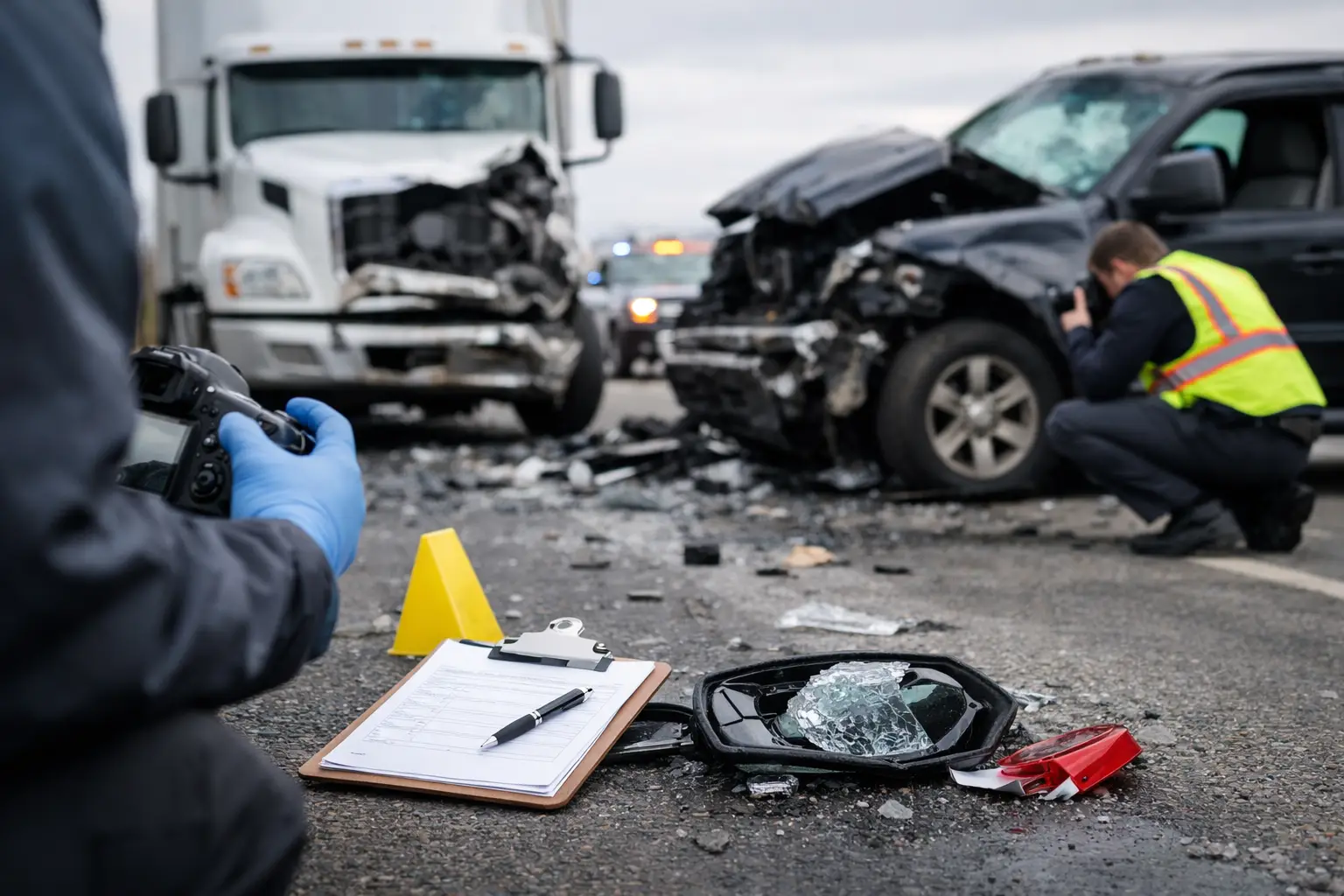

A trucking crash can erase good evidence in a matter of hours. The truck may be repaired, electronic data may be overwritten, witnesses may disappear, and the trucking company’s version of events may harden fast. If you are trying to prove what happened, the best evidence after trucking collision cases is usually the evidence gathered early, preserved properly, and tied directly to fault, injuries, and damages.
That matters because truck accident claims are rarely simple. A passenger vehicle wreck may involve two drivers and an insurance adjuster. A commercial truck case can involve the driver, the motor carrier, a trailer owner, a maintenance company, a cargo loader, and multiple insurance policies. The stronger the evidence, the harder it is for those parties to deny responsibility or shift blame.
Why the best evidence after a trucking collision disappears quickly
Commercial trucking cases move on a different timeline than ordinary car wrecks. Carriers often send investigators to the scene right away. Their goal is not to help you. Their goal is to protect the company and limit exposure.
At the same time, key records are not always kept forever. Electronic logging data, onboard computer information, dispatch communications, driver inspection reports, and surveillance footage may be lost, overwritten, or discarded unless someone acts quickly to preserve them. That is one reason injured people should speak with a lawyer early. Delay can cost you proof that may never be recovered.
The evidence that usually carries the most weight
Not every piece of evidence has the same value. Some proof is useful background. Some proof can decide the case.
Scene photos and video
Photos taken right after the crash can be powerful because they capture the vehicles before repairs, movement, or weather changes alter the scene. Skid marks, gouge marks, debris fields, lane positions, underride damage, crushed passenger compartments, and visible road conditions can all help show speed, angle of impact, and who crossed into whose path.
Video can be even stronger. Dashcam footage, business surveillance, traffic cameras, and bystander phone video may show the truck drifting, running a light, following too closely, or failing to stop. In disputed liability cases, clear video often carries more weight than conflicting statements.
The truck’s electronic data
Modern commercial trucks often record valuable operational information. Depending on the equipment, that may include speed, braking, throttle input, sudden deceleration, steering, seat belt use, engine hours, and fault codes. These systems are often called black box data, but the specific source may be the engine control module or another onboard system.
This evidence can be critical when a truck driver claims he was driving safely but the data suggests hard braking too late, excessive speed, or no braking at all. It can also help reconstruct what happened in the seconds before impact. The catch is simple: this information must be preserved and downloaded properly.
Driver logs, dispatch records, and hours-of-service evidence
Truck drivers and motor carriers must follow federal safety rules, including hours-of-service limits. Those rules are meant to reduce fatigue, but violations still happen. If a driver has been on the road too long, skipped required rest, or falsified logs, that can be powerful evidence of negligence.
Electronic logging device records, dispatch instructions, fuel receipts, toll records, GPS pings, and delivery schedules can reveal whether the driver was under pressure, behind schedule, or driving beyond legal limits. Sometimes the strongest case is not only that the driver made a bad move, but that the company’s practices helped cause it.
Inspection, maintenance, and repair records
Some truck crashes are not caused only by driver error. Brake failures, tire blowouts, steering problems, lighting issues, and trailer defects may point to poor maintenance or unsafe equipment. Inspection reports and repair histories can show whether the company ignored known problems or put a dangerous truck on the road.
This is especially important when the defense tries to frame the collision as unavoidable. If the evidence shows neglected brakes or repeated mechanical issues, the case may widen beyond the driver to the carrier, maintenance contractor, or another responsible party.
Police reports and official findings
A police crash report is not the final word, but it matters. Officers may document road conditions, witness statements, driver admissions, citations, signs of impairment, and preliminary fault assessments. In serious collisions, additional investigation may include measurements, diagrams, and commercial vehicle enforcement findings.
Still, police reports have limits. Officers do not always see every piece of evidence, and some reports contain mistakes. They should be used as part of the proof, not treated as the whole case.
Witness statements
Independent witnesses can make a major difference, especially when the truck driver and the injured person tell different stories. A neutral witness who saw the truck drifting, speeding, or ignoring traffic conditions can strengthen your claim.
The problem is that witness memory fades quickly. Names and phone numbers get lost. People move on. Early contact matters. A statement taken while events are fresh is often more useful than one collected months later.
Medical records that connect the crash to the injury
The best evidence after trucking collision claims is not limited to liability. You also must prove your injuries, treatment, prognosis, and losses. Emergency room records, imaging, specialist evaluations, surgical records, physical therapy notes, and physician opinions help establish what the collision did to your body and what recovery may require.
Consistency matters here. If there are long gaps in treatment or conflicting reports about how the injury happened, the defense will use that against you. Good medical documentation helps tie the force of the crash to the harm you suffered.
Proof of lost income and daily impact
Serious truck wrecks often affect more than medical bills. You may miss work, lose earning capacity, need help at home, or live with ongoing pain that changes daily life. Pay records, tax documents, employer statements, disability paperwork, and medical restrictions help show the financial side of the case.
A personal journal can also help. If you keep a simple record of pain levels, missed activities, sleep disruption, and treatment struggles, that can support the human impact of the injury. It will not replace medical evidence, but it can make damages more concrete.
What you should do to protect evidence
If you are physically able, take photos of the vehicles, the roadway, your injuries, license plates, company markings on the truck, and any visible cargo issues. Get witness contact information. Seek medical care promptly. Keep discharge papers, bills, prescriptions, and follow-up recommendations.
Do not assume the trucking company will save what helps you. In many cases, a lawyer sends a preservation letter demanding that critical records and electronic data be kept. That can include onboard data, logs, maintenance files, driver qualification records, dispatch communications, and post-crash inspection material. If the evidence is not preserved, proving your case can become harder than it should be.
When fault is not obvious
Some trucking collisions look straightforward at first and become more complicated later. The defense may argue you stopped suddenly, changed lanes, or were partly responsible. Texas follows modified comparative fault rules, which means blame can affect whether you recover compensation and how much you receive.
That is why strong evidence matters even in crashes that seem clear. A rear-end impact involving an 18-wheeler may still lead to disputes over lane position, mechanical failure, road design, weather, or visibility. The right evidence can cut through those arguments.
Why truck cases require a different legal approach
A serious trucking claim is not just a bigger car wreck claim. Federal regulations, corporate records, multiple defendants, and technical evidence often shape the case from the start. It may require accident reconstruction, analysis of electronic data, review of safety compliance, and a close look at the carrier’s hiring and supervision practices.
That is where early legal help can make a real difference. A plaintiff-side trial firm knows what to request, what may be at risk of disappearing, and how to build pressure with facts instead of guesswork. For injured Texans dealing with a commercial truck crash, The Buchanan Law Office, P.C. understands that every day lost can mean evidence lost.
The strongest trucking cases are built before the defense gets comfortable. If you have been hurt in a truck wreck, protect your health first, preserve what you can, and get legal guidance before critical proof slips away.









4 Comments