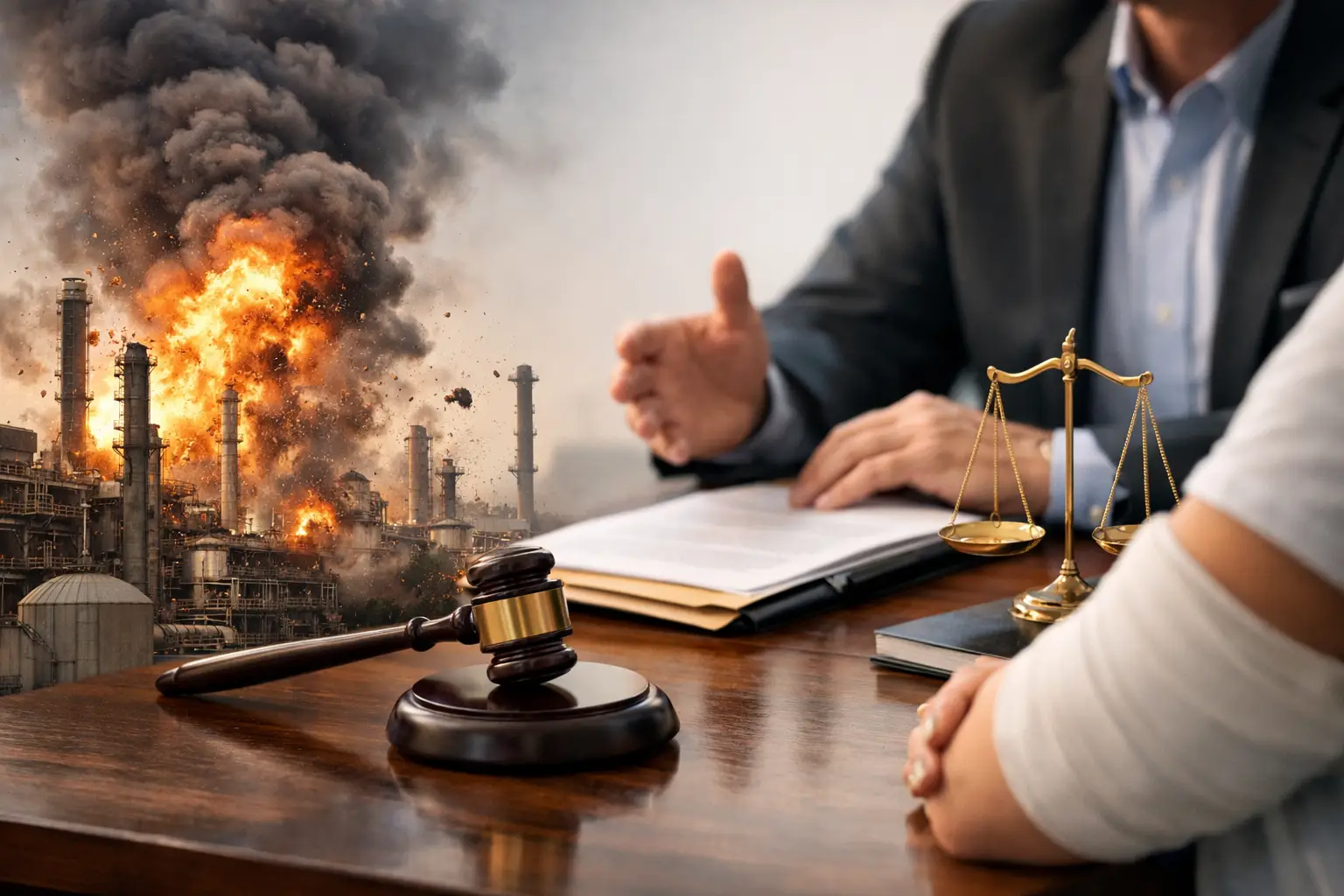

A refinery fire, plant explosion, gas leak, or workplace blast can change a family’s life in seconds. The medical bills begin immediately, but the legal questions often arrive just as fast: Who caused this? Is workers’ compensation the only remedy? What explosion lawsuit options are available? For injured Texans and families who have lost someone, the answer may involve more than one responsible party and more than one source of recovery.
An explosion case is not just another accident claim. These cases can involve employers, contractors, property owners, equipment manufacturers, maintenance companies, chemical suppliers, and insurers. The right steps taken early can protect evidence, preserve your claim, and put you in a stronger position to demand accountability.
Explosion Lawsuit Options Depend on What Caused the Blast
The central question in an explosion claim is why the explosion happened. A fire or blast may result from a preventable gas release, a faulty valve, unsafe electrical work, inadequate training, poor maintenance, defective machinery, chemical mishandling, or a failure to follow required safety procedures.
In a Texas industrial setting, several companies may be working at the same site. One company may own the facility, another may employ the injured worker, and other contractors may control scaffolding, welding, piping, inspections, or equipment repairs. Each party’s role matters. A thorough investigation can identify whether someone failed to provide a safe workplace, ignored known hazards, or put production ahead of safety.
Explosion injuries are often severe. Burns, lung damage, traumatic brain injuries, fractures, amputations, spinal injuries, hearing loss, and emotional trauma can require years of treatment. When negligence caused those losses, an injury victim may seek compensation for medical care, lost income, reduced earning capacity, pain and suffering, disfigurement, physical impairment, and other legally available damages.
Workplace Explosions May Involve More Than Workers’ Compensation
Many injured workers assume they cannot sue after a job-related explosion. That is not always true.
If an employer carries workers’ compensation insurance, an employee generally cannot bring a standard negligence lawsuit against that employer. Workers’ compensation may provide medical benefits and partial wage replacement without requiring the employee to prove fault. But those benefits may not cover the full financial and personal harm caused by a catastrophic injury.
A workers’ compensation claim does not necessarily prevent a lawsuit against a negligent third party. For example, a worker may have a claim against a contractor, subcontractor, equipment manufacturer, premises owner, maintenance company, or other business that was not the worker’s employer. These third-party claims can be especially important after refinery, chemical plant, construction, oilfield, and industrial accidents.
Texas also has employers that do not subscribe to the workers’ compensation system. When a nonsubscriber employer’s negligence contributed to an explosion injury, the injured worker may have the right to pursue a personal injury lawsuit directly against that employer. The facts, employment relationship, and available insurance coverage must be reviewed carefully.
If a worker dies from explosion injuries, surviving family members may have a wrongful death claim. Certain family members may seek damages for the loss of financial support, companionship, and guidance. The estate may also have a survival claim for losses and suffering experienced before death.
Claims After Home, Apartment, and Commercial Explosions
Industrial incidents are not the only explosions that lead to legal action. Natural gas explosions, propane blasts, apartment fires, defective appliance failures, and explosions at restaurants or commercial properties can also result from negligence.
A property owner or landlord may be responsible when unsafe conditions were known or should have been discovered and corrected. A utility company may face scrutiny if improper installation, inspection failures, or gas-line issues contributed to the incident. A contractor may be liable for careless repair work, faulty installation, or code violations.
In some cases, a product itself is the problem. A defective gas regulator, valve, furnace, water heater, battery, power tool, or industrial component can fail with devastating results. A product liability claim may focus on a design defect, manufacturing defect, or failure to provide adequate warnings and instructions. These cases require prompt attention because the damaged product can be critical evidence. Do not throw it away, repair it, or allow it to be discarded without first speaking with an attorney.
Evidence Can Disappear Quickly After an Explosion
After a major blast, companies and insurance carriers often begin their own investigations immediately. The site may be cleaned, equipment may be replaced, and witnesses may be asked to provide statements. Those actions can make it harder for an injured person to prove exactly what happened unless their interests are protected early.
If you are physically able, preserve what you can. Keep photographs and videos of the scene, injuries, damaged clothing, equipment, and property. Save medical records, discharge instructions, prescriptions, bills, work restrictions, and communications with an employer or insurer. Write down what you remember, including sounds, smells, warnings, prior equipment problems, and the names of people who saw the event.
Do not assume an incident report tells the full story. Internal reports may be incomplete or written to protect the company. A serious explosion claim may require inspection records, maintenance logs, safety procedures, training materials, contractor agreements, surveillance footage, electronic data, and testimony from engineers or industry experts. A lawyer can take steps to seek and preserve this information before it is lost.
Be Careful With Insurance Company Requests
An insurance adjuster may sound helpful after an explosion, but the insurer’s financial interest is not the same as yours. Early settlement offers can arrive before the full extent of burns, surgeries, rehabilitation needs, lost earning capacity, or psychological trauma is known.
You are not required to make a recorded statement simply because an adjuster asks for one. You should also be cautious about signing broad medical authorizations or accepting a settlement before you understand what rights you may be giving up. Once a claim is settled, you may not be able to return for more compensation if your condition worsens.
This does not mean every case must go to trial. A fair settlement can be the right result when it reflects the evidence and the real cost of the harm. But meaningful negotiations require preparation, documented damages, and a clear understanding of every party that may be responsible.
Texas Deadlines Can Affect Your Right to Recover
Time matters after an explosion. In many Texas personal injury and wrongful death cases, a lawsuit must be filed within two years. Different deadlines, notice requirements, and exceptions can apply depending on the claim, the parties involved, the age of the injured person, and whether a government entity may be involved.
Waiting can create two problems at once: a deadline may expire, and key evidence may become harder to obtain. Seeking legal guidance soon after an explosion gives your legal team a better chance to investigate the event while records, equipment, and witness recollections are still available.
What to Do After an Explosion Injury
Your first priority is medical care. Follow your doctors’ instructions, attend follow-up appointments, and do not minimize symptoms that may develop after the initial emergency treatment. Lung injuries, internal injuries, infection, nerve damage, and trauma-related symptoms can become more serious over time.
Report the incident through the appropriate channel, whether that means your employer, property manager, or law enforcement. Keep copies of any reports you receive. Avoid posting details, photographs, or opinions about the incident on social media while a claim is pending. Statements taken out of context can be used to challenge your case.
Then speak with an attorney experienced in serious injury and industrial accident litigation. The Buchanan Law Office, P.C. helps injured Texans and families assess fault, preserve evidence, and pursue compensation from the parties responsible. There is no reason to let a company, contractor, or insurer control the story of what happened before you understand your rights.
A preventable explosion can leave lasting physical, financial, and emotional damage. Getting clear legal advice early gives you the chance to protect your claim while you focus on healing and your family’s immediate needs.