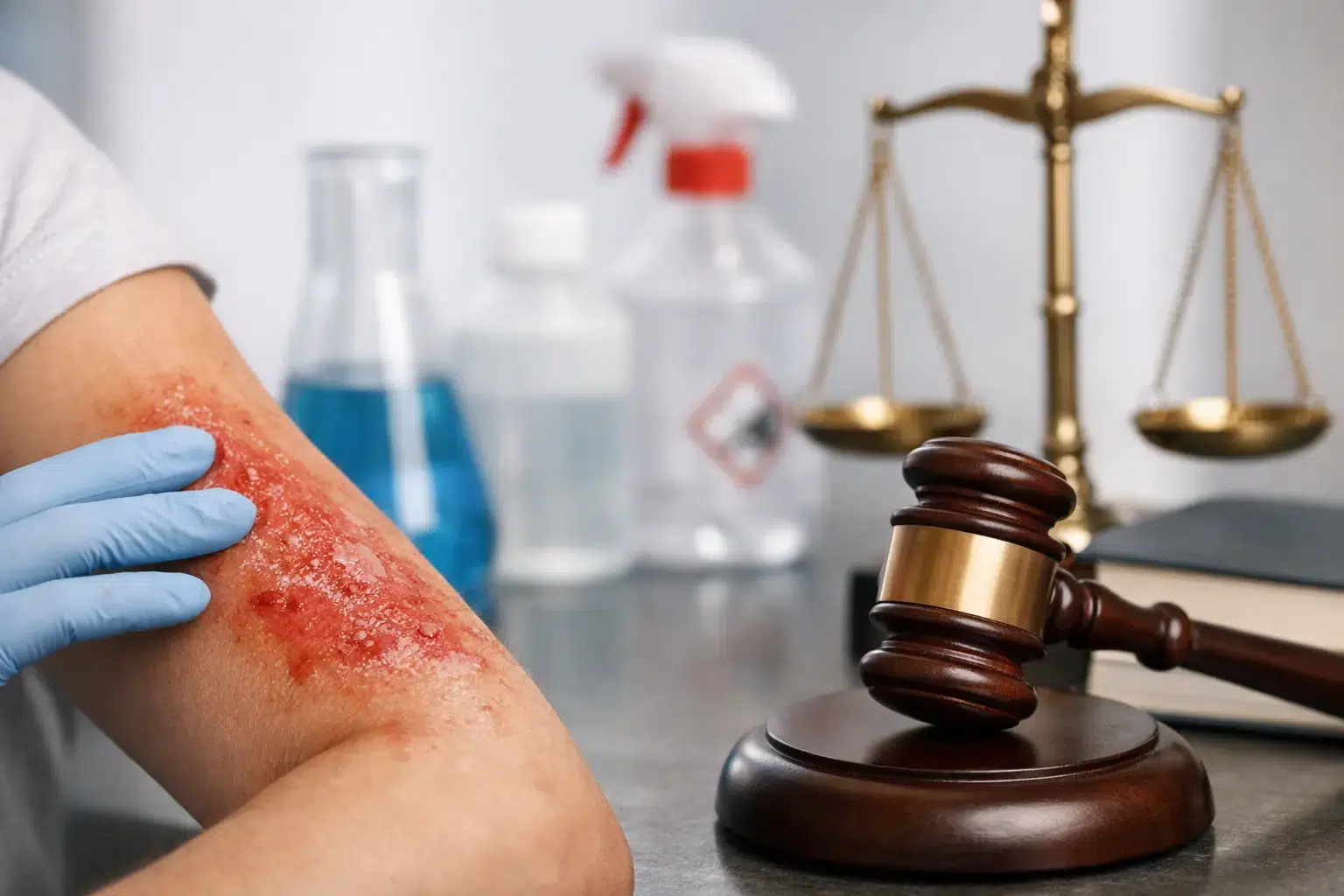

A chemical burn can turn a routine shift, a household repair, or a trip to a business into an emergency within seconds. Chemical burn lawsuit examples show why the details matter: the substance involved, the safety measures that were missing, who controlled the work or property, and whether a preventable failure caused the exposure.
For Texas workers and families, a burn injury claim is not limited to the pain of the initial incident. Serious chemical exposure may require skin grafts, wound care, surgeries, rehabilitation, treatment for eye or respiratory injuries, and time away from work. When another party’s negligence caused those losses, a lawsuit may provide a path to hold that party accountable.
What Chemical Burn Lawsuit Examples Can Show
No two burn cases are identical, and the value of a claim depends on the evidence and the harm caused. Still, common chemical burn lawsuit examples illustrate the types of negligence that can lead to a legal claim.
Refinery or chemical plant exposure
A Houston-area refinery, processing facility, or chemical plant may use acids, caustic liquids, solvents, gases, and other hazardous materials. A worker can suffer devastating burns when a line ruptures, a valve fails, a tank leaks, or a release occurs during maintenance.
Liability may extend beyond the injured worker’s direct employer. A plant owner, general contractor, subcontractor, maintenance company, equipment manufacturer, or another contractor may have created or failed to correct the dangerous condition. For example, a contractor who removes safety barriers, a company that fails to isolate pressurized equipment, or a manufacturer that supplies a defective valve may face responsibility.
Unsafe cleaning products or industrial chemicals
Commercial cleaners, drain openers, degreasers, concrete products, and disinfectants can cause severe injuries when they are improperly labeled, packaged, formulated, or handled. A worker may be burned after a container lacks adequate warnings, after incompatible chemicals are stored together, or after an employer provides no proper protective equipment.
A product claim may arise when the product itself was unreasonably dangerous or when the instructions and warnings did not adequately explain the risk. The analysis often turns on what the manufacturer knew or should have known, whether the product was altered after it left the manufacturer, and whether proper warnings could have prevented the injury.
Chemical burns on someone else’s property
Businesses and property owners have a duty to address hazardous conditions they know about or reasonably should discover. A customer, tenant, delivery driver, or visitor may have a claim after exposure to improperly stored chemicals, leaking pool supplies, maintenance materials, or spilled cleaning agents.
One example could involve a property owner who leaves an unlabeled corrosive chemical in a public or work-access area. Another could involve a restaurant or warehouse that ignores a known leak until someone suffers a burn. The key question is often whether the responsible party had notice of the danger and a reasonable opportunity to fix it or warn people.
Defective equipment and failed safety systems
Chemical exposure is frequently tied to equipment failure. A defective hose, pump, tank, valve, eyewash station, respirator, or protective suit can turn a manageable workplace risk into a life-changing injury.
In these cases, an investigation may examine inspection records, maintenance logs, prior incident reports, equipment design, and whether the safety device was fit for its intended use. A manufacturer or maintenance provider may be liable even when the accident happened at a job site controlled by someone else.
Who May Be Responsible for a Chemical Burn?
The first company named in an incident report is not always the only party responsible. Texas chemical burn claims often require a careful review of contracts, site-control responsibilities, safety procedures, and the chain of distribution for the chemical or equipment involved.
Potential defendants can include a negligent driver who transported hazardous materials, a property owner, a general contractor, a subcontractor, a chemical manufacturer, an equipment manufacturer, a distributor, or a maintenance company. In industrial incidents, multiple companies may have had separate duties involving training, lockout procedures, hazard communication, protective gear, inspections, or emergency response.
An injured employee may also face a different legal path depending on whether the employer carries workers’ compensation insurance. Workers’ compensation can limit an employee’s ability to sue a subscribing employer for negligence, but it does not necessarily prevent a claim against a negligent third party. If an employer does not subscribe to workers’ compensation, the legal options may be different. Families should not assume a workers’ compensation claim is the only source of recovery.
Evidence That Can Make or Break a Claim
Chemical burns often heal in stages, while physical evidence at the scene can disappear quickly. This is why early legal action can be critical. A responsible company may repair equipment, discard a damaged container, clean the area, or change procedures after an incident.
Useful evidence may include photographs of the scene and injuries, the chemical’s Safety Data Sheet, container labels, surveillance footage, maintenance records, work permits, inspection reports, training documents, witness statements, and emergency-response records. Medical records are equally important because they document the diagnosis, treatment, permanency, infection risk, scarring, and future care needs.
For an industrial accident, investigators may also need to determine the chemical concentration, how long the exposure lasted, whether proper personal protective equipment was available, and whether an eyewash or emergency shower was functioning. A company may claim that an injured person made a mistake. Evidence can show whether that alleged mistake was actually the predictable result of poor training, unsafe procedures, defective equipment, or missing safeguards.
Compensation in a Texas Chemical Burn Case
A successful injury claim can seek damages for losses caused by the defendant’s conduct. Depending on the case, compensation may include past and future medical expenses, lost income, reduced earning capacity, physical pain, mental anguish, physical impairment, disfigurement, and the cost of future treatment.
Scarring and disfigurement deserve particular attention in chemical burn cases. Skin grafts, contractures, facial injuries, loss of mobility, and visible scars can affect a person’s work, confidence, and daily life long after the emergency room visit. The full impact should be evaluated before accepting a quick settlement offer.
If a chemical burn causes a death, surviving family members may have wrongful death and survival claims. These cases demand a prompt investigation because the evidence may be controlled by the companies involved and because Texas filing deadlines apply. The correct deadline depends on the facts, but waiting can put a valid claim at risk.
Steps to Take After a Chemical Burn
First, get emergency medical care and follow the treating provider’s instructions. Chemical burns can worsen after exposure, and internal, eye, or respiratory injuries may not be obvious at first. If possible, preserve the container, label, clothing, photographs, and contact information for witnesses, but do not put yourself at further risk to collect evidence.
Report the incident through the appropriate workplace, property, or business process. Ask for a copy of the incident report when available. Avoid signing a broad release, giving a recorded statement to an insurance company, or accepting a settlement before you understand the medical prognosis and the parties who may be responsible.
A lawyer can take over communications with insurers, investigate the incident, preserve evidence, and identify third-party claims that might otherwise be missed. The Buchanan Law Office, P.C. represents injured people on a contingency-fee basis, meaning there are no upfront attorney’s fees for a qualifying personal injury case.
A chemical burn is not just an accident report or a workers’ compensation file number. It may be evidence that a company failed to protect the people exposed to its chemicals, equipment, or property. Getting legal guidance early can help protect the proof, the claim, and your family’s ability to pursue the recovery you need.