
A spinal injury claim can turn on details that disappear fast. A damaged vehicle gets repaired, a refinery work area is cleaned, surveillance video is recorded over, and witnesses begin to forget what they saw. The best evidence for spinal injuries is not limited to an MRI or a diagnosis. A strong Texas claim connects the accident, the medical harm, the financial loss, and the responsible party’s conduct.
For an injured person, the priority is medical care. For a legal claim, the priority is preserving proof before an insurance company or employer has the chance to minimize what happened. That work should begin as soon as possible after a car wreck, truck collision, workplace accident, or other serious event.
Best Evidence for Spinal Injuries After an Accident
The most persuasive claims tell one consistent story: a preventable accident happened, it caused a real injury, medical treatment was necessary, and the injury has changed the person’s ability to work and live. Each category of evidence supports a different part of that story.
Medical records establish the injury and its progression
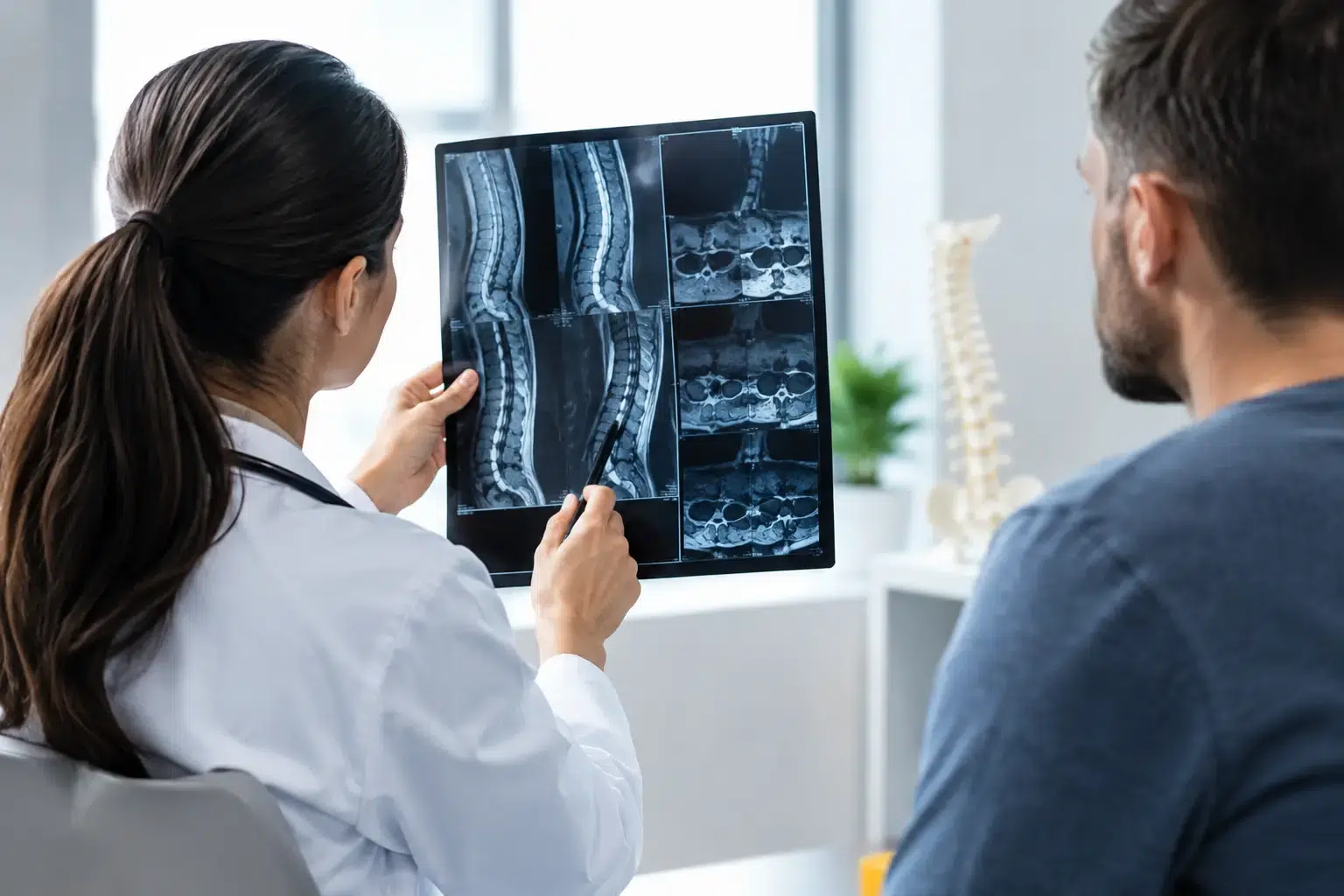
Emergency room records, ambulance reports, imaging studies, surgical records, physical therapy notes, and follow-up appointments are often central to a spinal injury claim. They document symptoms close in time to the accident and show whether the condition involves a disc herniation, fracture, spinal cord damage, nerve compression, or another serious diagnosis.
MRI and CT images can be powerful, but the written reports matter too. They help explain what physicians found and whether the injury is consistent with the forces involved in the accident. Records showing referrals to specialists, pain management, surgery, rehabilitation, or assistive devices can also demonstrate the seriousness of the condition.
Prompt care is important, but it is not always simple. Some spinal injuries do not fully reveal themselves at the scene. Adrenaline can mask pain, and numbness, weakness, radiating pain, headaches, or limited movement may worsen over the following days. If symptoms develop after an accident, seek medical attention rather than assuming they will pass. A delay can affect both your health and the arguments an insurer may make about causation.
The accident evidence proves how the injury happened
Medical evidence alone does not establish who is legally responsible. The claim must also show what caused the crash or incident. In a motor vehicle case, this may include police reports, photographs of the vehicles, debris patterns, roadway conditions, traffic-camera footage, witness statements, and data from the vehicles involved.
For commercial truck accidents, the available proof may be broader. Driver logs, dispatch communications, maintenance records, inspection reports, onboard computer data, and event data recorders can reveal speeding, hard braking, hours-of-service violations, poor maintenance, or distracted driving. These records are often controlled by the trucking company, not the injured person, and they may not be kept indefinitely.
Workplace and industrial accidents require the same urgency. Incident reports, safety meeting records, equipment inspection records, training documents, photographs of the work site, and coworker statements may show that a contractor, employer, equipment manufacturer, or property owner failed to address a known danger. At a plant, refinery, warehouse, or construction site, conditions can change quickly after an incident. Preserving the scene and records can make a meaningful difference.
Photos and videos capture what paperwork may miss
Clear photos taken soon after an accident can show vehicle damage, crushed safety equipment, spilled materials, broken guardrails, poor lighting, missing warnings, or hazardous work conditions. Video may show the collision itself, the position of the vehicles, the injured person’s difficulty moving, or the condition of the location before repairs are made.
Do not assume a lack of dramatic vehicle damage means a spinal injury is minor. The mechanics of an impact, the position of the body, prior vulnerability, and the type of collision all matter. Still, photos help medical and accident reconstruction experts understand the event and answer predictable defense arguments.
Witness testimony can fill critical gaps
An independent witness can be especially valuable when the other driver, company, or insurer disputes fault. Witnesses may confirm that a driver was speeding, a truck drifted between lanes, a supervisor ignored a safety concern, or a dangerous condition existed before the injury occurred.
Get names and contact information when possible, but do not pressure anyone to make a statement. A witness who gives a clear, accurate account is more useful than someone pushed into speculation. Coworkers may also have relevant information, although they may be reluctant to speak when their employer is involved. That is one reason early legal help matters in serious workplace cases.
Evidence of Pain, Lost Income, and Daily Limits
A spinal injury can affect far more than a medical chart. It may prevent an industrial worker from lifting, climbing, standing for long shifts, driving, or performing other essential duties. It may force a parent to rely on family members for household tasks or make ordinary activities painful and exhausting.
Pay stubs, tax records, benefit statements, work schedules, job descriptions, and written restrictions can help document lost income and reduced earning capacity. For self-employed Texans, invoices, contracts, business records, and canceled jobs may be equally important. Future losses may require analysis from medical, vocational, or economic experts, particularly when the person cannot return to the same work.
A personal journal can also be useful when it is honest and specific. Record pain levels, sleep problems, missed work, appointments, medication effects, and activities you could not complete. Do not exaggerate. The goal is to preserve an accurate account of how the injury affects daily life between medical visits.
Prior Conditions Do Not End a Spinal Injury Claim
Insurance companies commonly search for old back pain, prior treatment, or degenerative findings in medical records. A prior condition does not give another party permission to make it worse. Under Texas law, the key question is often whether the accident caused a new injury or aggravated an existing one.
This is where complete medical records and qualified medical opinions become important. Trying to hide prior injuries is a mistake. It can damage credibility and give the defense an opening to argue that other records cannot be trusted. A straightforward explanation of your medical history is far more effective than allowing an insurer to frame it first.
What Can Undermine Spinal Injury Evidence
The insurance company will look for gaps and inconsistencies. Missing appointments without explanation, ignoring medical restrictions, posting misleading social media content, or giving a recorded statement before you understand the full extent of your injury can all create problems.
That does not mean an injured person must remain at home or stop living their life. It means context matters. A single photograph of someone standing at a family gathering does not prove they can perform heavy labor for ten hours a day. But careless posts can be taken out of context and used to challenge a claim. Follow medical advice, keep records, and be cautious about what you share publicly.
You should also avoid signing broad medical authorizations or accepting an early settlement before the diagnosis and treatment plan are clear. A quick offer may not account for surgery, future therapy, lost earning capacity, or long-term pain. Once a settlement is signed, obtaining additional compensation is usually difficult or impossible.
Preserve Proof Before It Is Gone
After a serious spinal injury, save photographs, medical paperwork, receipts, contact information, and any messages related to the accident. Write down what happened while your memory is fresh. If a vehicle, defective product, or piece of equipment may be important, do not allow it to be repaired, discarded, or altered without first getting legal advice.
The Buchanan Law Office, P.C. can investigate serious injury claims, seek critical records, and deal with insurance companies while you focus on treatment. A free consultation can help you understand what evidence may be available and what steps need to be taken now. The sooner reliable proof is protected, the better positioned you are to demand accountability for the harm you have suffered.