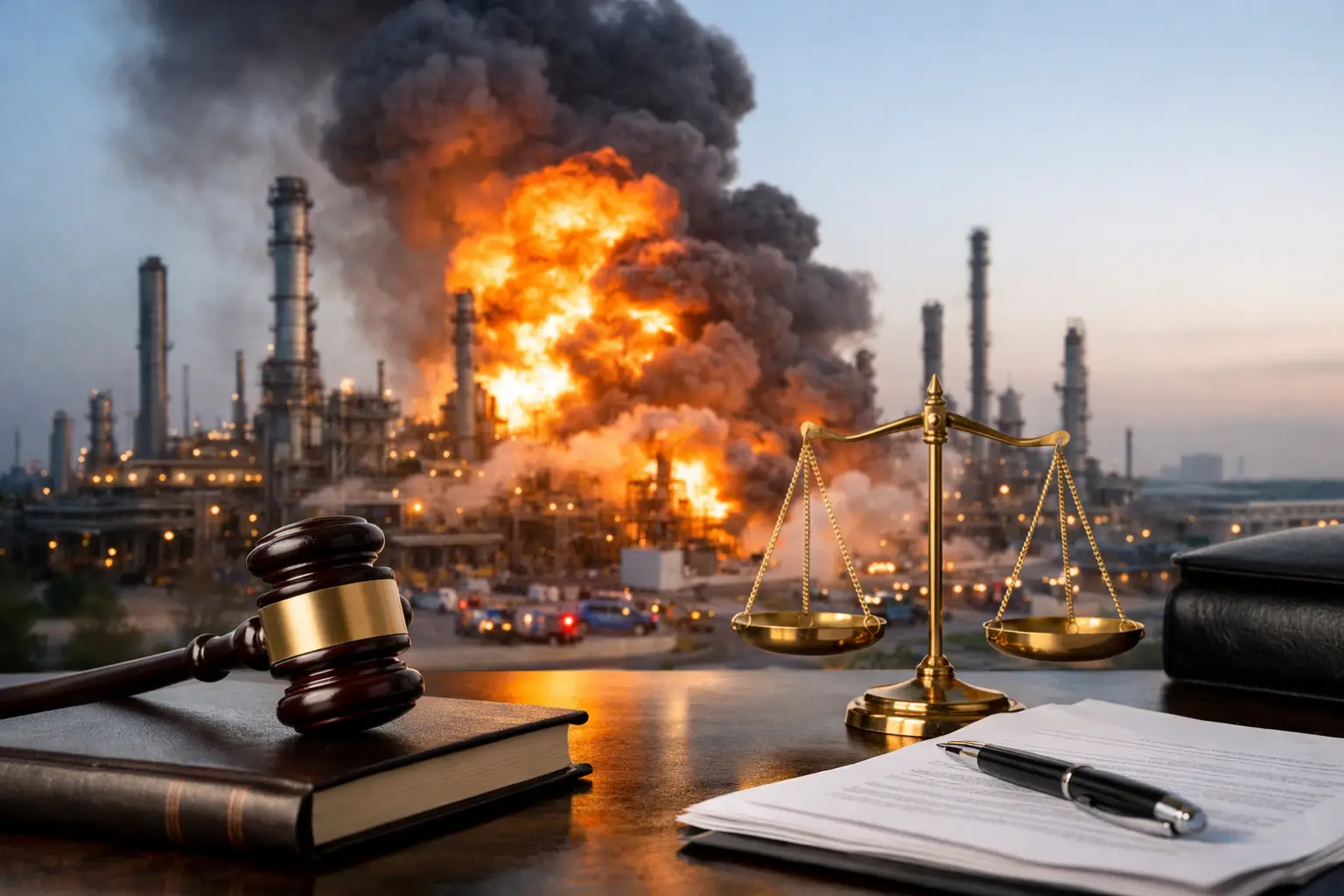

A refinery blast changes lives in seconds. One shift can end with burn injuries, toxic exposure, months out of work, or a funeral no family was prepared to plan. That is why reviewing refinery explosion lawsuit examples matters – not as theory, but as a practical way to understand who may be liable, what damages may be available, and why early legal action can make a real difference.
In Texas, refinery and chemical plant accidents often involve more than one responsible party. The plant owner may bear responsibility for unsafe operations, but contractors, maintenance companies, equipment manufacturers, and outside inspection teams may also have played a role. That is one reason these cases are rarely simple. A serious explosion claim usually turns on technical evidence, internal safety records, maintenance history, contractor oversight, and whether management ignored known hazards.
What refinery explosion lawsuit examples usually show
Most refinery explosion lawsuit examples follow a common pattern. There is a preventable event, serious harm, and then a fight over whether the explosion was truly an accident or the result of negligence that had been building for weeks, months, or even years.
In many cases, the warning signs were there. A pressure relief system may have failed. A corroded pipe may have been left in service. A contractor may have been assigned work in a hazardous area without proper shutdown procedures. Sometimes the issue is poor training. Other times it is production pressure, where a company keeps operations moving despite known risks because downtime costs money.
That matters legally because injury lawsuits are built on proof. The stronger the evidence that a company knew or should have known about a danger, the stronger the injured person’s claim may be. In fatal cases, that same evidence can support a wrongful death action by surviving family members.
Common fact patterns in refinery explosion lawsuit examples
One common example involves a maintenance turnaround gone wrong. A refinery shuts down part of a unit for repairs, brings in outside contractors, and work begins around volatile chemicals or flammable gases. If lockout procedures are not followed, lines are not fully cleared, or ignition sources are not controlled, a flash fire or explosion can happen. In that situation, liability may extend beyond one employer because multiple companies may have shared control over the worksite.
Another example involves defective equipment. A valve, pump, heat exchanger, or monitoring device may fail under normal operating conditions. If the failure happened because the product was defectively designed or manufactured, the injured worker may have a product liability claim in addition to any workplace-related claim. That distinction is important in Texas because some injured workers are limited by workers’ compensation rules against suing their direct employer, but they may still have valid claims against third parties.
A third pattern involves toxic release after an explosion. The blast itself may cause burns, blunt trauma, or hearing damage, but the release can cause inhalation injuries, chemical burns, and longer-term medical complications. Lawsuits in these cases often include claims for future medical treatment, diminished earning capacity, and pain and suffering, not just immediate hospital bills.
Then there are wrongful death cases. If a refinery worker is killed in an explosion, surviving spouses, children, and parents may have claims under Texas law. These cases can seek damages for lost financial support, loss of companionship, mental anguish, funeral expenses, and other losses tied to the death. In especially serious cases, punitive damages may also become an issue if the evidence shows gross negligence.
Why these cases often involve more than workers’ compensation
Many injured workers assume that if they were hurt on the job, workers’ compensation is the only path available. That is not always true. Texas is different from many states because not every employer carries workers’ compensation coverage. Some employers are nonsubscribers, which can open the door to a direct injury lawsuit.
Even when workers’ compensation applies, third-party claims may still exist. If a contractor created the hazard, if a manufacturer supplied defective equipment, or if another outside company failed to maintain critical safety systems, an injured worker may be able to pursue compensation beyond basic workers’ comp benefits.
That difference is significant. Workers’ compensation may cover some medical care and a portion of lost wages, but it generally does not provide damages for pain and suffering. A personal injury lawsuit can. For families facing life-altering burns, surgeries, disability, or loss of a loved one, that gap is not minor.
What victims usually seek in refinery explosion lawsuits
The value of a refinery explosion case depends on the injury, the available evidence, the number of liable parties, and the insurance or corporate assets involved. There is no honest one-size-fits-all estimate.
That said, these claims often seek compensation for emergency care, hospitalization, surgeries, skin grafts, rehabilitation, medication, future treatment, lost income, reduced earning capacity, physical pain, emotional distress, disfigurement, and permanent impairment. In death cases, families may also pursue wrongful death and survival damages.
Burn injury cases are often among the most severe. A worker may survive but face years of treatment, repeated procedures, infection risk, limited mobility, and visible scarring. The legal claim has to reflect the long-term reality of those injuries. A quick insurance offer rarely does.
How companies defend these claims
Refinery defendants do not usually admit fault early. They may argue the injured worker caused the incident, ignored safety training, or entered a restricted area without authorization. They may claim the event was unforeseeable, that a contractor had sole responsibility, or that the injuries were not as severe as alleged.
This is one reason early investigation matters. Surveillance footage can disappear. Witnesses can be pressured or become hard to locate. Maintenance logs, shift reports, inspection records, and internal emails may tell a very different story than the first public statement issued after the explosion.
A strong legal team will move quickly to preserve evidence, identify all responsible parties, and prevent the case from being narrowed too soon. In industrial explosion litigation, waiting can cost a victim leverage.
Refinery explosion lawsuit examples and the role of gross negligence
Some refinery explosion lawsuit examples involve more than ordinary carelessness. They point to gross negligence – conduct so extreme that it shows a conscious indifference to the safety of workers and others nearby.
That might include repeated failure to repair known hazards, forcing employees to work around unsafe equipment, ignoring prior near-miss incidents, or violating basic industry safety standards despite obvious danger. Gross negligence claims matter because they can support exemplary damages in Texas. Not every case qualifies, and proving it takes real evidence, but when the facts support it, the claim can increase both accountability and case value.
What to do after a refinery explosion injury
The first priority is medical care. Follow treatment recommendations and keep records of every diagnosis, prescription, work restriction, and follow-up appointment. If you are physically able, document what you remember about the incident as soon as possible. Names of witnesses, photos of injuries, and details about the work area can become important later.
Do not assume the company investigation is enough. Internal investigations are designed to protect the business, not the injured worker. You should also be cautious with recorded statements and early settlement discussions. Once you accept a low offer or sign a release, reopening the claim may be impossible.
A lawyer can evaluate whether your case involves workers’ compensation, a nonsubscriber claim, a third-party lawsuit, a wrongful death action, or some combination of these. That analysis is not just procedural. It shapes what damages may be available and who can be held accountable.
For injured workers and families in Houston and across Texas, these cases are about more than compensation. They are about forcing the truth into the open and making sure the financial burden falls on the parties that caused the harm, not the people left dealing with the damage. The Buchanan Law Office, P.C. handles serious industrial injury cases with that goal in mind.
If a refinery explosion has turned your life upside down, the right legal help can protect evidence, clarify your options, and put real pressure on the companies responsible before they define the story for you.