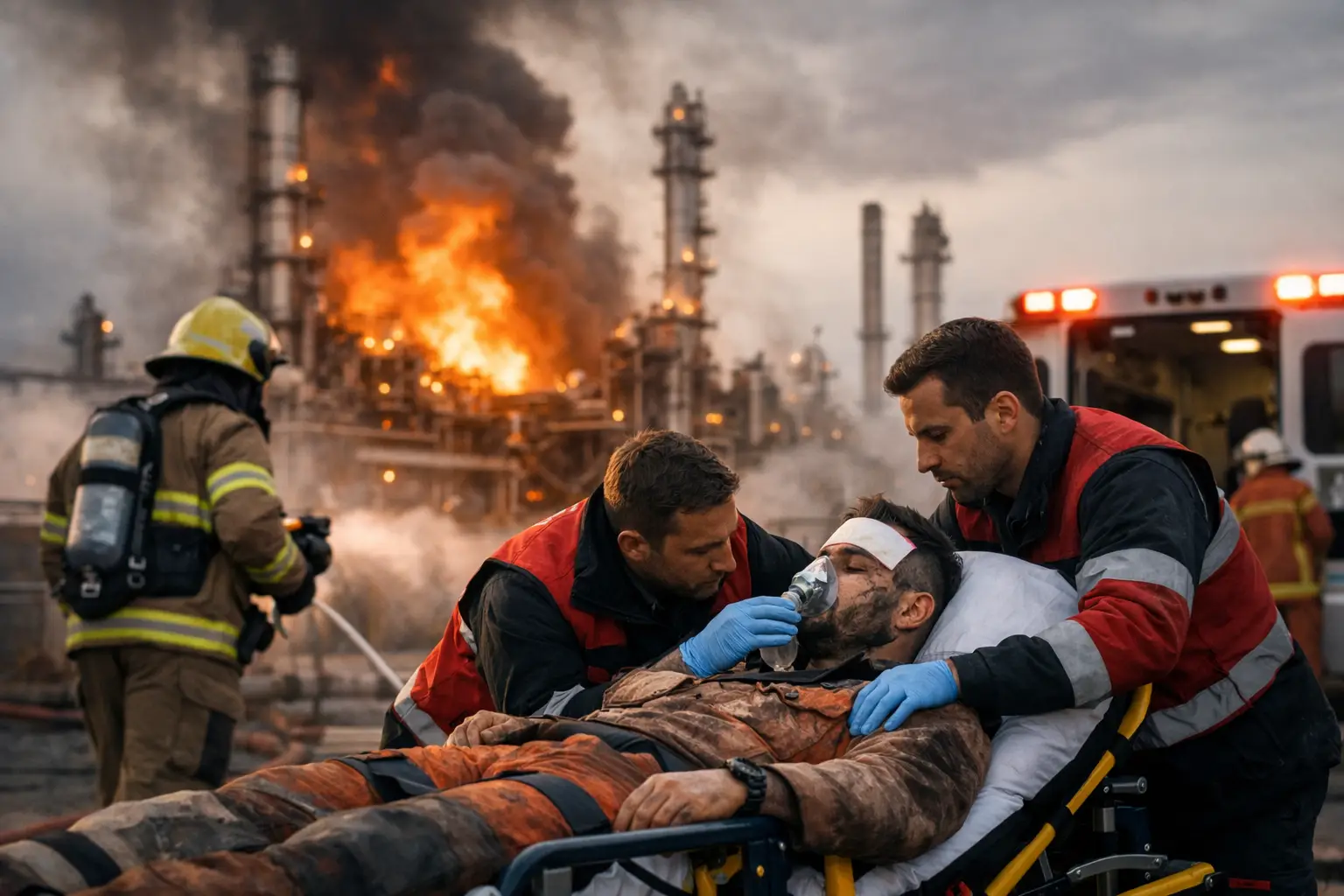

A refinery fire can change a worker’s life in minutes. Burns, blast injuries, smoke inhalation, chemical exposure, and trauma may not be fully apparent at the scene. If you are asking, “what if refinery fire caused injuries,” the immediate priorities are medical care, personal safety, and protecting your ability to hold the responsible parties accountable.
Refinery operators, contractors, equipment manufacturers, and other companies that profit from industrial work have a duty to take safety seriously. When a fire results from poor maintenance, unsafe procedures, defective equipment, inadequate training, or ignored warnings, injured workers and families should not be left to carry the financial burden alone.
Get Medical Care Even If You Feel Able to Work
After a refinery fire, adrenaline can mask serious injuries. A person may walk away from an explosion, flash fire, or chemical release believing they are fine, only to develop breathing problems, painful burns, hearing loss, neurological symptoms, or post-traumatic stress later.
Get evaluated by qualified medical professionals as soon as possible. Follow through with recommended treatment, specialist appointments, therapy, and medication. This is first and foremost about your health. It also creates a clear record connecting your injuries to the refinery incident.
Smoke and chemical exposure deserve particular attention. Respiratory damage can worsen over time, and certain exposures may cause symptoms that are not obvious immediately. Tell your medical providers where you were, what occurred, whether you were exposed to smoke or chemicals, and what protective equipment you had available.
Report the Fire and Document What You Can
Report your injuries through the appropriate workplace channels, but be careful about making assumptions or accepting blame. Give a factual account of what happened. Do not guess about the cause of the fire or sign a statement you do not understand.
If your condition allows, preserve information that may later matter. Take photographs of visible injuries, clothing, protective gear, damaged vehicles, and the area from a safe distance. Write down the time, location, job being performed, equipment involved, alarms or warnings you heard, and the names of coworkers who saw the event.
Evidence can disappear quickly after a refinery fire. The site may be cleaned, machinery may be repaired or removed, and internal investigators may begin collecting records immediately. A company investigation may be necessary, but it is not the same as an independent review focused on the injured person’s rights.
Keep copies of medical records, discharge instructions, work restrictions, incident reports, pay stubs, receipts, and communications from your employer or insurance company. Do not alter damaged clothing or equipment if it may be evidence. Store it safely and ask an attorney before turning over original items.
Why Refinery Fires Happen
Refineries handle flammable materials under high pressure and high temperatures. That does not make fires unavoidable. Many serious incidents trace back to preventable failures, including poorly maintained valves or piping, gas leaks, equipment failure, inadequate lockout procedures, improper hot work, weak emergency planning, or pressure to keep production moving despite known hazards.
Contractor-heavy worksites can create additional safety gaps. One company may own the refinery, another may supervise the project, and several contractors may supply labor, equipment, maintenance, or specialized services. Determining who controlled the work and who knew about a dangerous condition is often central to a claim.
The cause should be investigated before key evidence is lost. Maintenance logs, inspection records, work permits, safety meeting records, training documents, surveillance footage, communications, and alarm data may reveal whether a company failed to act on a known risk.
What If a Refinery Fire Caused Injuries at Work?
Being injured on the job does not automatically mean workers’ compensation is your only option. Texas law is different from many states because some employers do not subscribe to the workers’ compensation system. The available path depends on the employer’s coverage, the contracts involved, and the facts of the fire.
If your employer carries workers’ compensation insurance, benefits may cover certain medical treatment and part of lost wages. However, workers’ compensation benefits may not fully address the harm caused by a catastrophic refinery injury. Strict notice and filing rules can apply, so do not wait to seek guidance.
Even when workers’ compensation applies, a third-party claim may still be available. For example, an injured worker may have a claim against a negligent contractor, subcontractor, property owner, equipment manufacturer, maintenance company, or another party that was not the employer. A defective valve, faulty protective gear, or unsafe work performed by another company can create a separate basis for recovery.
If an employer is a nonsubscriber, an injured worker may be able to bring a negligence claim directly against that employer. These cases require prompt investigation and a careful review of the employer’s defenses, policies, and safety practices.
Families who lose a loved one in a refinery fire may also have wrongful death and survival claims. No legal action can undo that loss. It can, however, demand accountability and seek financial support for the family’s lost income, lost relationship, medical expenses, funeral costs, and other legally recognized damages.
Be Careful With Insurance Adjusters and Company Representatives
After a serious fire, insurance representatives and company investigators may contact injured workers quickly. They may sound concerned, and some may be polite and professional. Their job, however, is often to protect the company’s financial interests.
You are not required to give a recorded statement to another company’s insurer simply because it requests one. You should also be cautious about broad medical authorizations, early settlement offers, and releases. A settlement may look helpful while medical bills are mounting, but accepting money too soon can prevent you from pursuing additional compensation if your condition becomes more serious.
Do not assume an employer’s report tells the full story. Reports can contain errors, omit relevant conditions, or frame the incident in a way that minimizes corporate responsibility. Ask for a copy when available, preserve your own account, and speak with a lawyer before agreeing to language that could affect your claim.
Compensation May Cover More Than Current Medical Bills
The value of a refinery fire claim depends on the injuries, the parties involved, available insurance or assets, the proof of fault, and the long-term impact on the injured person and family. There is no honest one-size-fits-all answer.
A properly evaluated claim may seek compensation for emergency care, hospitalization, surgeries, rehabilitation, future medical needs, lost income, reduced earning capacity, physical pain, mental anguish, disfigurement, and physical impairment. Severe burns may require repeated procedures and leave permanent scarring. Brain injuries, respiratory illness, and psychological trauma can also limit a person’s ability to return to industrial work or live independently.
In cases involving reckless conduct or extreme safety failures, additional damages may be at issue. The facts matter. The strongest claims are built on evidence, credible medical analysis, and an early effort to identify every responsible party.
Speak With a Refinery Fire Injury Lawyer Promptly
Refinery fire cases are not ordinary accident claims. They can involve complex industrial operations, multiple corporations, subcontractor agreements, safety regulations, engineering evidence, and substantial insurance coverage. The companies involved often begin preparing their defense immediately.
An experienced plaintiff-side attorney can move to preserve evidence, investigate the fire, identify responsible parties, handle insurer communications, and calculate the full impact of the injury. This lets you focus on medical treatment and your family instead of trying to fight a corporate legal team alone.
The Buchanan Law Office, P.C. represents injured Texans and families facing serious industrial accident claims. There are no upfront attorney’s fees in a contingency-fee case. You should understand your legal options before you sign away rights or accept a settlement that does not account for your future.
If a refinery fire injured you or someone you love, get medical attention, keep records, and seek legal advice as soon as you can. The right action taken early can protect both your health and your claim.