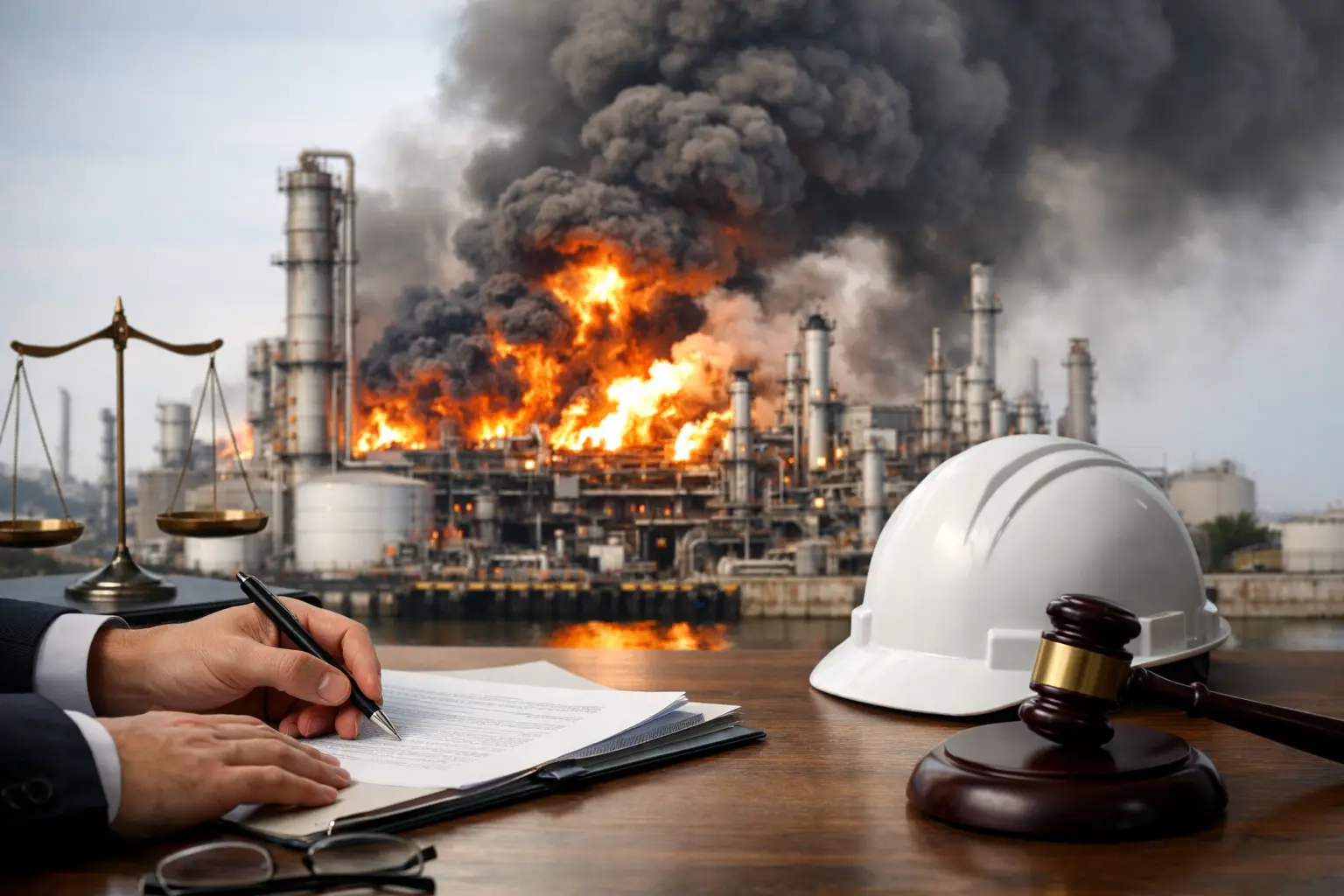

A chemical plant fire can turn an ordinary workday into a life-changing emergency within seconds. Burns, blast injuries, toxic smoke exposure, and the loss of a loved one can leave Texas families facing medical decisions, missed income, and unanswered questions. Chemical plant fire lawsuits give injured workers, contractors, nearby residents, and surviving families a way to demand answers and pursue compensation when negligence contributed to the disaster.
The hours and days after a fire matter. Plant operators, insurers, and corporate investigators often begin building their version of events immediately. Injured people need someone focused on protecting their interests, preserving evidence, and identifying every party that may be responsible.
What Causes Chemical Plant Fires?
Chemical plants, refineries, and processing facilities handle flammable materials under high pressure and high heat. Safe operation requires careful maintenance, competent supervision, reliable equipment, and strict compliance with safety procedures. When any part of that system fails, the consequences can be catastrophic.
A fire may begin with a leaking pipe, ruptured vessel, failed pressure-release device, faulty electrical component, or improperly maintained pump. In other cases, workers may not receive adequate training, warnings, protective equipment, or procedures for handling dangerous chemicals. A contractor’s error, a defective product, or poor coordination between companies working at the site can also play a role.
The official explanation for a fire is not always the complete explanation. A plant may describe an event as an unavoidable accident while evidence points to ignored maintenance warnings, deferred repairs, unsafe production demands, or a known equipment problem. An independent investigation can be essential.
Who May Be Responsible for a Plant Fire?
Responsibility does not automatically stop with the company that owns the facility. Industrial sites often involve multiple employers, contractors, maintenance companies, equipment manufacturers, engineering firms, and property operators. Each may have separate duties to protect workers and the public.
Potentially liable parties may include the plant owner or operator, a general contractor, an outside maintenance crew, a manufacturer of defective valves or safety systems, or a company that designed or installed equipment. A trucking company or chemical supplier could also be involved if unsafe transport, loading, or handling contributed to the event.
Determining who had control over the dangerous condition is a central issue. So is determining who knew, or should have known, about the risk. Companies may try to shift blame from one entity to another, especially when the injuries are severe. A thorough legal investigation looks beyond the most obvious defendant.
Workers’ Compensation Is Not Always the Only Claim
Many injured workers assume workers’ compensation is their only option. That may be true in some situations, but it is not always the end of the analysis. Texas employers generally have the option to subscribe to the workers’ compensation system or not, and the available legal claims can differ significantly depending on that status.
Even when an employer carries workers’ compensation insurance, an injured worker may have a separate third-party claim against another negligent company. For example, a contractor, equipment manufacturer, property owner, or subcontractor may be legally responsible for a dangerous condition that caused the fire.
If an employer does not subscribe to workers’ compensation, an injured employee may be able to bring a direct negligence claim against that employer. The facts matter. Workers should not accept a quick answer from an insurance adjuster or assume they have no rights beyond the benefits initially offered.
Evidence Can Disappear Quickly After a Fire
After an industrial fire, the scene may be repaired, cleaned, dismantled, or placed back into operation. Physical evidence can be lost, and electronic records may be overwritten. Witness memories also fade, particularly when workers are pressured to return to work or are concerned about their jobs.
A strong claim may depend on preserving damaged equipment, maintenance logs, inspection reports, incident reports, process safety records, training materials, photographs, video, alarm data, and communications about prior hazards. It may also require input from fire investigators, engineers, industrial safety professionals, and medical experts.
Do not sign broad releases, recorded statements, or settlement documents without understanding what rights you may be giving up. Insurers may move quickly because they know that early settlements can limit their financial exposure. A settlement that appears helpful during a financial crisis may fail to account for future surgeries, skin grafts, respiratory treatment, lost earning capacity, or permanent disability.
What Compensation May Be Available?
Every case is different, and no lawyer can honestly promise a result before the facts are investigated. Still, a chemical plant fire lawsuit may seek compensation for the full harm caused by another party’s negligence.
Depending on the claim, recoverable damages can include past and future medical expenses, lost wages, reduced earning capacity, physical pain, mental anguish, physical impairment, disfigurement, and loss of household services. Severe burns and inhalation injuries often require long-term care that extends far beyond the first hospital stay.
When a fire causes a death, surviving family members may have wrongful death and survival claims. These cases can seek damages related to the loss of financial support, companionship, care, guidance, and the pain and suffering the injured person experienced before death. No legal action can replace a family member, but holding responsible parties accountable can provide financial security and force needed attention on unsafe practices.
In limited cases involving gross negligence, additional damages may be available under Texas law. These claims require strong evidence, such as proof that a defendant knew of an extreme risk and proceeded with conscious indifference to the safety of others.
Steps to Take After a Chemical Plant Fire
Your first priority is medical care. Follow your doctors’ instructions, attend appointments, and document every diagnosis, treatment, prescription, and work restriction. Some injuries, including respiratory damage and toxic exposure symptoms, may not be fully apparent on the day of the fire.
If you can do so safely, keep copies of documents and communications related to the incident. Save photographs of visible injuries and damaged personal property. Write down what you remember about the fire, including alarms, odors, equipment problems, instructions from supervisors, and names of people who witnessed the event. Do not take confidential documents or violate site rules, but preserve records you lawfully possess.
Report the injury through the appropriate workplace process, but be careful about giving speculative statements. You do not need to diagnose the cause of the fire before seeking legal advice. You only need to protect your right to investigate what happened.
Do Not Wait for the Company’s Investigation
Company investigations may identify useful facts, but they are not a substitute for an independent review. The company and its insurers have their own legal and financial interests. They may focus on reducing liability rather than fully explaining why safety systems failed.
Texas also has legal deadlines for filing injury and wrongful death claims. The applicable deadline can vary based on the parties involved and the type of claim, and missing it can prevent recovery altogether. Early action gives your legal team a better chance to preserve evidence and identify every responsible party before critical information is gone.
When to Speak With a Chemical Plant Fire Lawyer
You should consider speaking with an attorney as soon as possible if you suffered burns, lung injuries, fractures, head trauma, chemical exposure, or other serious harm in a plant fire. Families should also seek prompt legal guidance after a fatal industrial accident. This is especially true when an employer, contractor, adjuster, or company representative asks for a statement, offers money, or urges you to sign paperwork.
A plaintiff-side trial lawyer can investigate the fire, evaluate workers’ compensation and third-party options, calculate the real cost of your injuries, and take over communications with insurance companies. At The Buchanan Law Office, P.C., injured Texans and families can seek a free consultation without paying upfront attorney’s fees. The firm is paid only if compensation is recovered.
A chemical plant fire can leave you with more questions than answers. You do not have to let the companies involved control the story, the evidence, or your future. Get informed legal guidance early, protect your claim, and give your family the chance to pursue the accountability it deserves.