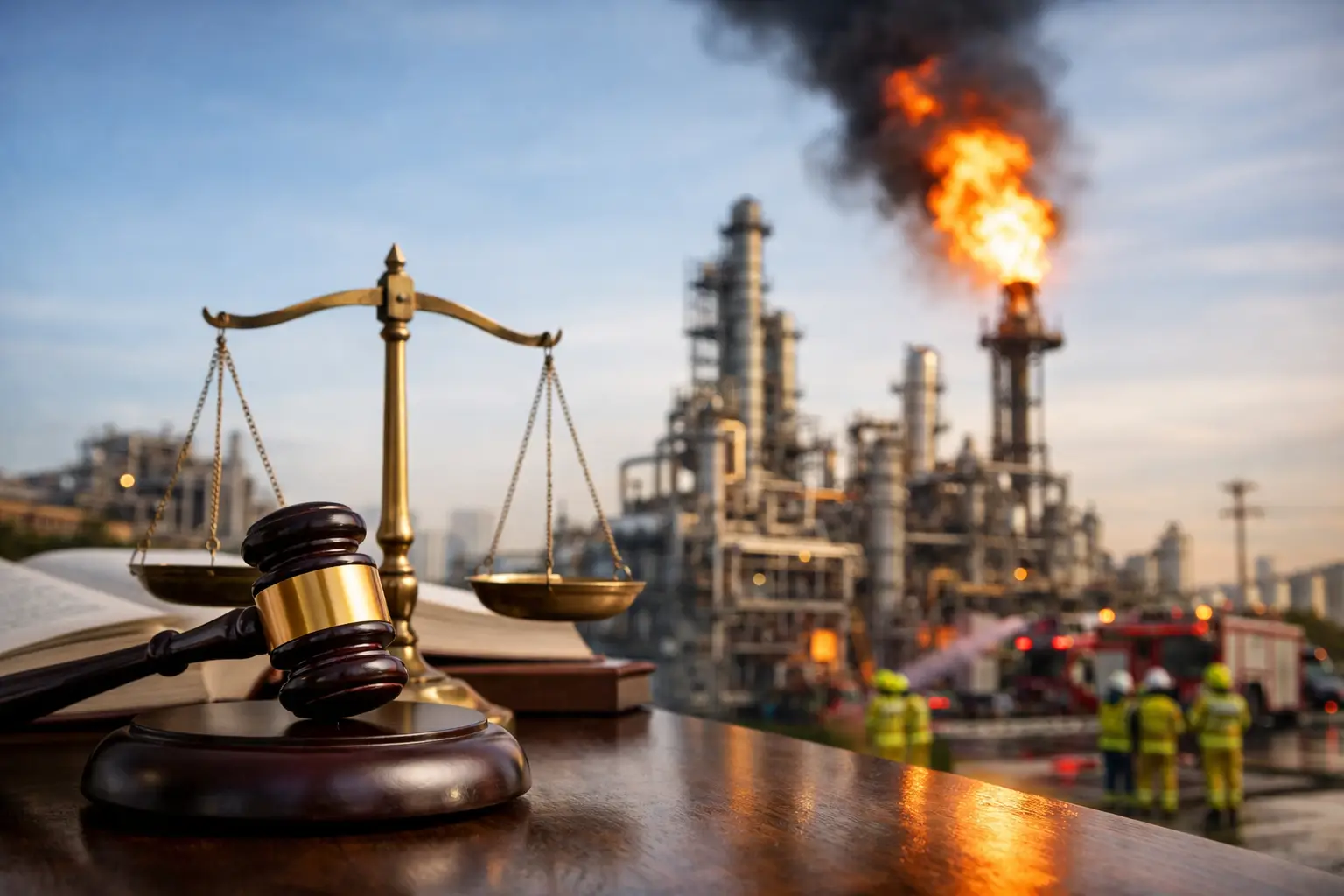

A refinery explosion, fire, toxic release, or equipment failure can change a worker’s life in seconds. Refinery accidents often leave injured Texans facing painful medical treatment, lost income, uncertainty about their jobs, and pressure from employers or insurance companies before they know the full extent of their injuries. Families who lose a loved one face an even harder road.
Houston and the surrounding Gulf Coast are home to major refining and petrochemical operations. These facilities perform dangerous work every day, but danger is not an excuse for preventable harm. When a company cuts corners on maintenance, training, safety procedures, contractor oversight, or hazard control, it should be held accountable for the consequences.
Why Refinery Accidents Are So Serious
Refineries operate with highly flammable materials, pressurized systems, corrosive chemicals, heavy machinery, confined spaces, and elevated work areas. A single failure can trigger a chain of events: a leaking line ignites, a pressure vessel ruptures, a worker falls during an emergency response, or a toxic cloud exposes employees and nearby residents.
The injuries are frequently severe. Burn injuries can require surgeries, skin grafts, rehabilitation, and long-term treatment. Chemical exposure may cause respiratory damage, neurological symptoms, organ injury, or conditions that do not become clear until weeks or months after the incident. Workers can also suffer traumatic brain injuries, spinal injuries, crush injuries, broken bones, amputations, and psychological trauma.
A refinery incident may harm more than the people standing closest to the event. Contractors, maintenance crews, delivery drivers, emergency responders, and neighboring residents can all be put at risk. That matters because the legal path available to an injured person can depend on their role, their employer, and the companies involved at the site.
Common Causes of Refinery Accidents
A serious industrial incident rarely has one simple cause. Investigations often uncover a combination of unsafe conditions, poor decisions, and missed warnings. Some failures occur in an instant, but the conditions that made the accident possible may have been building for months or years.
Equipment failures are a common source of refinery fires and explosions. Corroded pipes, faulty valves, worn pumps, defective sensors, failing pressure-relief systems, and neglected electrical components can allow dangerous materials to escape or ignite. Proper inspection and maintenance are not optional when lives depend on the equipment working as designed.
Human error can also play a role, but employers should not use that phrase to avoid responsibility. A worker’s mistake may reflect inadequate training, exhausting schedules, understaffing, unclear procedures, poor supervision, or a workplace culture that prioritizes production over safety. A company has a duty to provide workers with the tools, information, and staffing needed to do the job safely.
Contractor operations can complicate the picture. Large refinery sites may have multiple contractors working alongside refinery employees, each with separate supervisors, policies, and responsibilities. A contractor could create a hazardous condition, fail to warn others about a risk, or send workers into an unsafe area. Those facts can be critical when identifying every party responsible for an injury.
What to Do After a Refinery Injury
Medical care comes first. Even if an injury seems manageable immediately after an explosion, fire, fall, or exposure, seek prompt evaluation. Adrenaline can hide serious pain, and inhalation injuries or chemical exposures may worsen after the initial event. Follow treatment recommendations and keep records of appointments, prescriptions, symptoms, and out-of-pocket costs.
Report the incident according to workplace procedures, but be careful about making assumptions or accepting blame. Give a truthful account of what happened. Do not guess about the cause, minimize symptoms, or sign a statement you do not understand. If you receive paperwork from an employer, insurer, or investigator, take the time needed to review it before agreeing to language that may affect your claim.
Preserving evidence is also essential. If possible, save photos of visible injuries, damaged clothing or protective equipment, the work area, and any relevant documents. Write down what you remember while details are fresh, including the time, location, equipment involved, alarms, odors, conditions, instructions given, and names of witnesses. Do not take evidence in violation of site rules or put yourself in danger to obtain it.
A refinery company and its insurers may begin their own investigation immediately. Their representatives are focused on protecting the business. Injured workers and families should have someone protecting their interests as well. Early legal guidance can help secure records, preserve evidence, identify responsible parties, and prevent an injured person from being pushed into an unfair settlement.
Workers’ Compensation Is Not Always the Whole Story
Many injured workers assume workers’ compensation is their only option. Sometimes it is part of the answer, but every case must be evaluated carefully. Texas has unusual workers’ compensation rules, and not every employer subscribes to the state system. The status of the employer can affect the legal rights and remedies available after a workplace injury.
Even when workers’ compensation applies, a third-party claim may be possible. For example, an injured worker may have a claim against a negligent contractor, equipment manufacturer, property owner, maintenance company, or another entity that contributed to the accident. These claims can be especially important because workers’ compensation benefits may not cover the full financial and personal losses caused by a catastrophic injury.
If defective machinery, protective gear, valves, scaffolding, tools, or safety systems contributed to the event, a product liability claim may need to be investigated. If a contractor ignored established safety requirements, failed to isolate hazardous energy, or created a dangerous work condition, that contractor may bear responsibility. The facts matter, and quick assumptions can leave money and accountability on the table.
Damages After Refinery Accidents
Compensation in a refinery injury case should reflect the actual harm caused, not just the first stack of medical bills. Depending on the circumstances, an injured person may seek recovery for medical expenses, future treatment, lost wages, reduced earning capacity, physical pain, mental anguish, disfigurement, physical impairment, and other legally available damages.
For a family grieving a wrongful death, the case may involve lost financial support, loss of companionship, mental anguish, funeral expenses, and other losses recognized under Texas law. No legal claim can replace a parent, spouse, child, or friend. A claim can, however, provide financial stability and force responsible companies to answer for conduct that put people in danger.
The value of a case depends on the evidence, the severity and permanence of injuries, insurance coverage, the parties involved, and other facts. Be wary of any insurer that offers quick money before doctors can assess the long-term consequences of a burn, chemical exposure, brain injury, or orthopedic trauma. A fast settlement may be designed to close the claim before its true value is known.
Why Prompt Investigation Matters
Refinery sites change quickly after an incident. Damaged equipment may be repaired or removed. Video can be overwritten. Witnesses may leave the project, and electronic records can become harder to locate. Companies may also conduct internal reviews that do not answer every question an injured worker or family needs answered.
A thorough legal investigation may examine maintenance records, work permits, training materials, safety meeting records, inspection reports, incident reports, contractor agreements, site photographs, surveillance footage, and communications between companies. Experts may be needed to evaluate process safety, industrial hygiene, engineering failures, fire origin, or the design of a product or safety system.
This work takes time, but delay can make it harder. Texas law also imposes filing deadlines, and the right deadline depends on the type of claim and parties involved. Waiting for an employer or insurer to explain your rights is not a sound strategy.
If you or someone you love was harmed in a refinery accident, get medical care, protect the evidence you can, and speak with an experienced injury lawyer before signing away your rights. The Buchanan Law Office, P.C. helps injured Texans and families pursue accountability without upfront attorney fees. The right legal action can give you room to focus on healing while someone fights for the answers and compensation your family deserves.