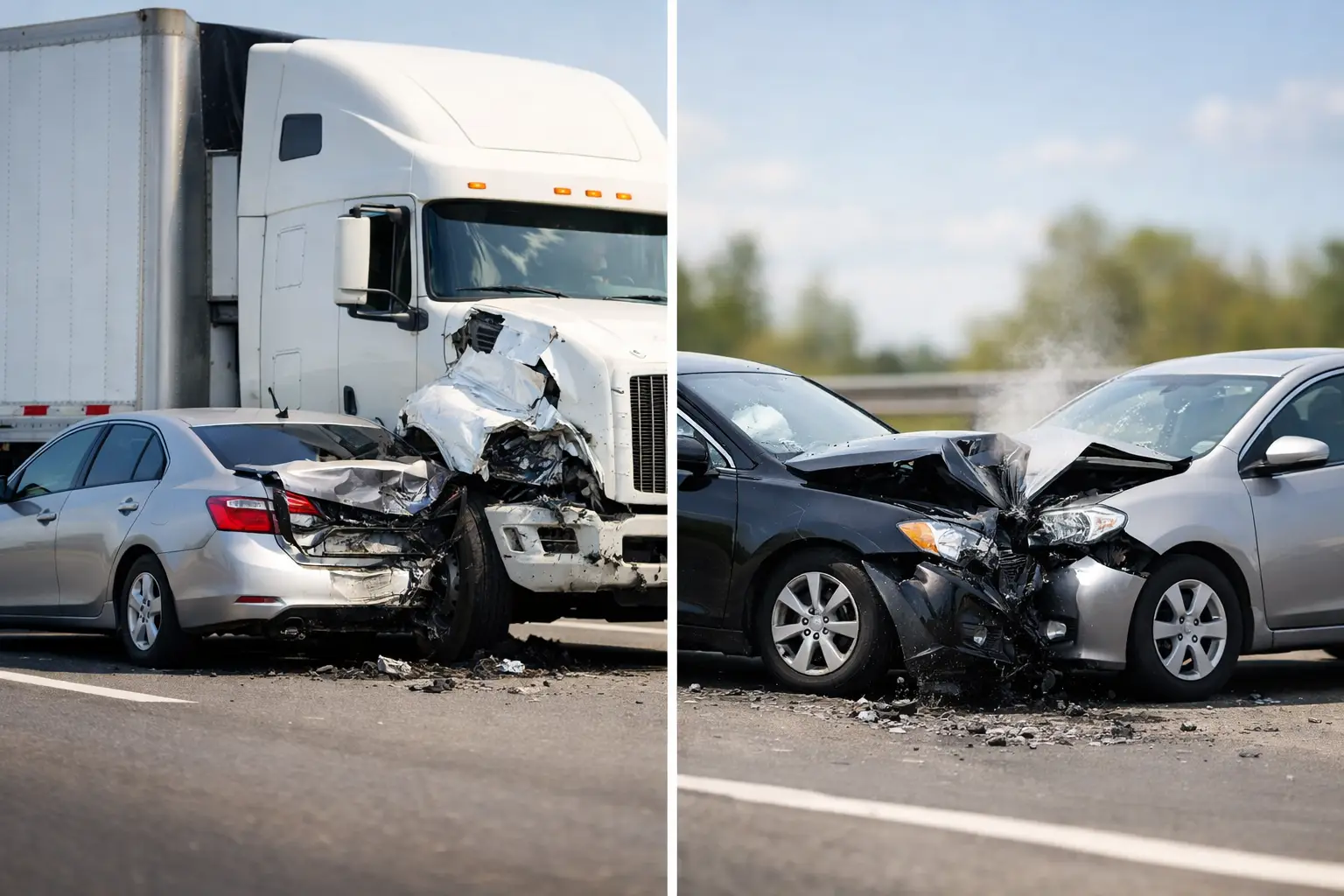

A fully loaded 18-wheeler can outweigh a passenger car by tens of thousands of pounds. That difference changes nearly everything after a crash. A truck accident versus car accident is not simply a larger version of the same claim. The injuries may be more severe, the evidence can disappear quickly, and several companies may share responsibility.
For injured Texans, the practical issue is clear: a trucking company and its insurer may begin protecting their interests immediately. You should have someone protecting yours. Understanding the differences can help you take the right steps before critical evidence, deadlines, or insurance coverage become problems.
Why Truck Crashes Often Cause Greater Harm
Passenger vehicles are built to carry people, not to absorb the force of a commercial truck. A tractor-trailer can weigh up to 80,000 pounds when loaded. Even a lower-speed collision may cause catastrophic injuries when that weight meets a smaller car.
Truck crashes commonly involve traumatic brain injuries, spinal cord damage, crush injuries, broken bones, internal bleeding, burns, amputations, and wrongful death. Recovery can require surgery, rehabilitation, home modifications, long-term care, and time away from work. The financial losses can extend far beyond the first emergency room bill.
A car accident can also cause devastating injury, particularly in a high-speed, head-on, or drunk driving collision. The difference is not automatic. It depends on the force of the collision, the vehicles involved, whether occupants were restrained, and the specific injuries. But the size and stopping distance of a commercial truck make severe consequences more likely.
Truck Accident Versus Car Accident: Who May Be Liable?
Many car accident claims begin with one central question: which driver caused the crash? The answer can still be contested, but the investigation is often limited to the drivers, witnesses, vehicles, and insurance policies involved.
A truck accident may involve a much broader chain of responsibility. The truck driver may have been speeding, distracted, impaired, fatigued, or following too closely. Yet the driver is not always the only party whose conduct matters. A trucking company may have encouraged unrealistic delivery schedules, failed to train its driver, ignored prior safety violations, or allowed a driver with a dangerous record to remain on the road.
Other responsible parties may include the owner of the truck or trailer, a freight broker, a cargo loading company, a maintenance contractor, a manufacturer of a defective truck part, or another motorist whose actions triggered the collision. Determining responsibility requires a careful review of the business relationships behind the truck, not just the crash report.
Texas law may allow an injured person to pursue claims against more than one negligent party. That matters because the available insurance coverage, the evidence, and the legal theories can differ from one defendant to another. A serious case should not be narrowed too quickly to a single driver.
The Evidence Is Different – and It Can Disappear
After a typical car crash, useful evidence may include photos, vehicle damage, police reports, witness statements, medical records, phone records, and traffic camera footage. Those items matter in truck cases too, but commercial trucking creates additional records that can be crucial.
Depending on the circumstances, an investigation may need to examine the truck’s electronic control module, dash camera footage, driver logs, hours-of-service records, dispatch communications, inspection reports, maintenance files, cargo records, drug and alcohol testing records, and the driver’s qualification file. These records can show whether the driver had enough rest, whether the truck was properly maintained, or whether company pressure played a role in unsafe driving.
Some electronic data may be overwritten during normal operations. Video footage can be erased. Vehicles may be repaired, moved, or placed back into service. That is why early action matters. An attorney can send preservation demands to put responsible parties on notice that evidence must be retained while the claim is investigated.
Do not assume that a police report tells the complete story. Officers do important work at difficult crash scenes, but they may not have access to company records, digital truck data, or later witness statements. The report is one piece of evidence, not necessarily the final answer on fault.
Insurance Coverage and Corporate Defenses
In a car accident claim, the at-fault driver’s policy limits may be modest. If the injuries are serious, uninsured or underinsured motorist coverage may become an important source of recovery. The available coverage depends on the policies involved and the facts of the crash.
Commercial trucks often carry larger liability policies than passenger vehicles, but larger coverage does not mean an easier claim. Trucking insurers and corporate defendants have significant resources. They may dispatch investigators, hire experts, inspect damaged vehicles, and contact witnesses shortly after the collision. Their goal is to limit what they pay, not to make sure an injured family is fully compensated.
They may argue that the injured driver contributed to the crash, that the injuries were preexisting, that the truck driver acted reasonably, or that a separate contractor is responsible. Texas uses a proportionate responsibility system, so allegations of shared fault can affect recovery. These arguments should be investigated and answered with evidence, not accepted because an insurance adjuster repeats them.
A prompt settlement offer can be especially risky after a serious truck crash. At the beginning, you may not know whether you need future surgery, whether you can return to your job, or how the injury will affect daily life. Once a release is signed, it can be difficult or impossible to seek additional compensation later.
What to Do After a Truck Crash in Texas
Your health comes first. Accept medical care at the scene when needed and follow through with recommended treatment. Gaps in care can harm your recovery and give an insurer an opening to argue that you were not seriously injured.
If you are able, take photos of the vehicles, roadway, skid marks, traffic signals, debris, the truck’s markings, and visible injuries. Get contact information from witnesses, but do not put yourself in danger to collect evidence. Keep copies of medical bills, discharge instructions, work restrictions, repair estimates, and communications from insurance companies.
There are also several steps that can protect your claim:
- Report the collision to law enforcement and request the crash report when it becomes available.
- Avoid giving a recorded statement to the trucking insurer before receiving legal advice.
- Do not post details, photos, or opinions about the crash on social media.
- Speak with an experienced truck accident attorney as soon as possible, particularly when injuries are serious or a loved one was killed.
You generally must act within legal deadlines to pursue a Texas personal injury or wrongful death claim. The deadline can vary based on the facts, the parties involved, and other legal issues. Waiting can also make it harder to locate evidence and witnesses. Early legal guidance gives you a better chance to preserve what matters.
Damages in Serious Truck and Car Accident Claims
Whether the case involves a truck or passenger vehicle, an injured person may seek compensation for losses caused by another party’s negligence. This may include medical expenses, future treatment, lost wages, reduced earning capacity, physical pain, mental anguish, physical impairment, disfigurement, and property damage. In a fatal crash, surviving family members may have wrongful death and survival claims.
The value of a claim is not determined by a formula or by the size of an insurer’s first offer. It depends on the evidence, the severity and permanence of the injuries, the available coverage, the responsible parties, and how the crash changed the injured person’s life. Cases involving catastrophic injury require a full accounting of future needs, not a rushed estimate based only on current bills.
The Buchanan Law Office, P.C. represents injured people and families facing high-stakes accident claims. A strong case begins with a clear investigation, prompt evidence preservation, and a willingness to hold negligent drivers and companies accountable.
After a truck crash, you do not need to sort out federal safety rules, insurance demands, and medical uncertainty on your own. Get medical attention, protect the evidence you can, and seek legal advice before the trucking company gets too far ahead of the facts.