
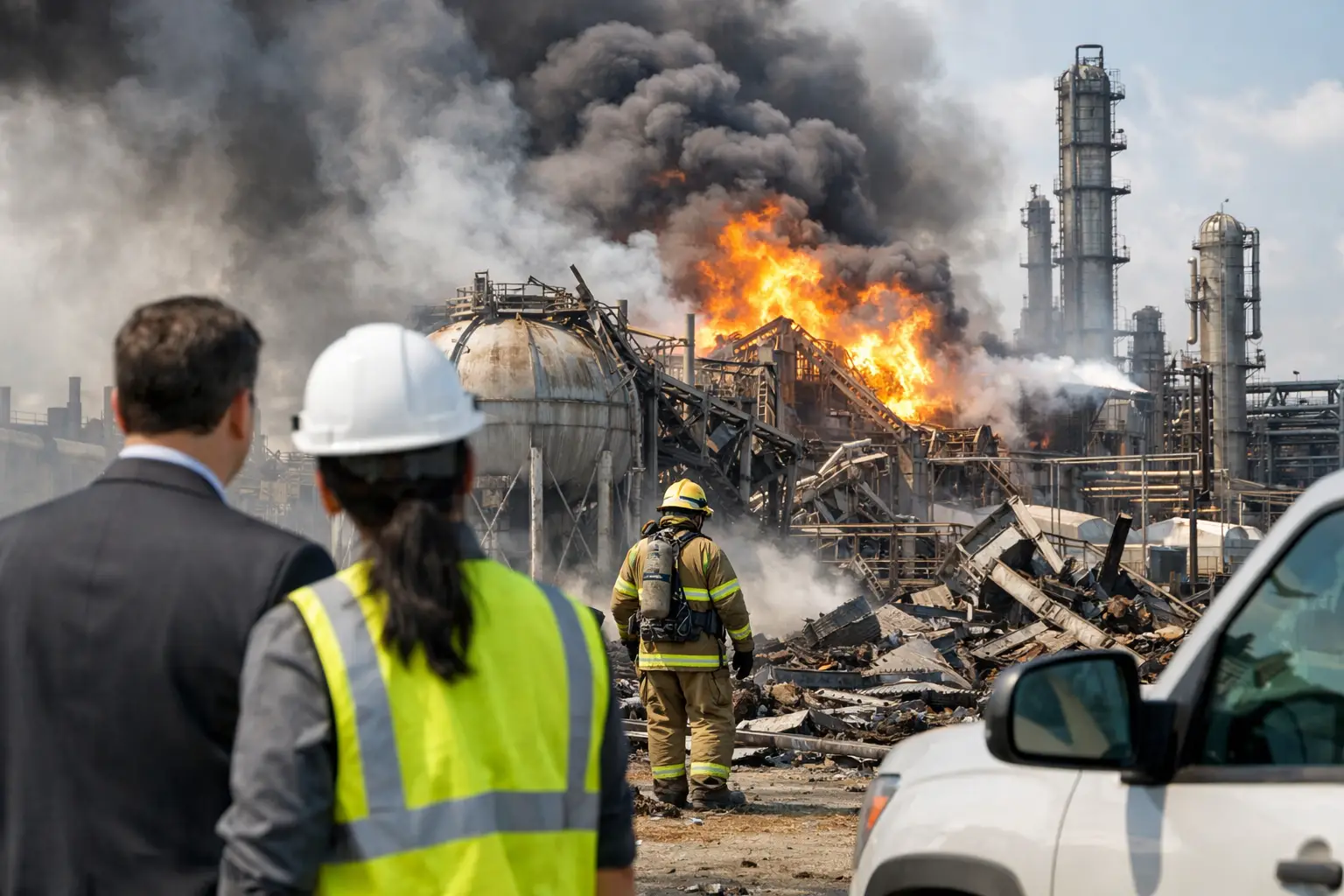

A plant explosion can turn an ordinary shift into a life-changing emergency in seconds. The best steps after a plant explosion are not about handling everything alone. They are about getting safe, getting medical help, protecting your family, and preventing a company or insurer from controlling the story before the facts are known.
Texas industrial workers often face pressure to report to a supervisor, sign paperwork, accept a quick explanation, or return to work before they are physically ready. Do not let that pressure override your health or your legal rights. Explosions, fires, chemical releases, and flash burns can cause injuries that are not fully visible in the first hours or days.
Best Steps After a Plant Explosion: Put Safety First
If there is any continuing danger, leave the area as directed by emergency personnel. Follow evacuation instructions, move upwind from smoke or chemical vapor when possible, and do not reenter the facility to retrieve tools, a phone, or personal belongings. A secondary explosion, fire, structural collapse, or toxic release can turn a survivable event into a catastrophic one.
Call 911 or seek emergency medical care immediately, even if you think you can “walk it off.” Blast-force injuries can affect the brain, ears, lungs, and internal organs without obvious external wounds. Smoke inhalation, chemical exposure, and burns may also worsen after the initial event. Let medical professionals know you were involved in an industrial explosion and describe every symptom, including ringing in the ears, confusion, headache, coughing, shortness of breath, nausea, dizziness, eye irritation, numbness, or pain.
If you were exposed to chemicals, follow decontamination instructions from emergency responders and medical personnel. Do not guess which substances were involved or attempt to treat a serious exposure yourself.
Get Medical Care and Document Every Symptom
Your medical record may become one of the most important pieces of evidence in an injury claim. It connects the explosion to the harm you suffered and creates a timeline that cannot be rewritten later by an employer, contractor, or insurance company.
Be direct with doctors and nurses. Explain where you were, what happened, whether you were knocked down or thrown, what you inhaled or touched, and when symptoms started. Do not minimize pain because you want to be seen as tough or because you are worried about missing work. Industrial workers are often accustomed to working through discomfort, but a delayed diagnosis can put both your health and your claim at risk.
Keep copies of discharge instructions, prescriptions, test results, medical bills, work restrictions, and appointment records. Continue treatment as recommended. If a doctor places you on restrictions, follow them. Returning to a physically demanding job too early can make an injury worse and may give insurers an opening to argue that you were not seriously hurt.
Report the Incident, But Be Careful With Statements
Report the explosion and your injury through the proper workplace channels as soon as you reasonably can. A written report can establish that the incident occurred on the job and that your employer knew about it. Ask for a copy of any report you submit or sign.
At the same time, do not speculate about the cause. You may not know whether the explosion resulted from a gas leak, failed valve, defective equipment, improper maintenance, unsafe work procedures, inadequate training, electrical failure, or another hazard. A rushed statement can be used to shift blame onto an injured worker before a real investigation takes place.
Stick to facts: where you were, what you saw, heard, smelled, and felt, and what injuries you experienced. Do not sign a statement you do not understand, and do not agree that you were at fault simply because a supervisor suggests it. You have the right to ask questions and seek legal advice before signing documents that could affect your recovery.
Preserve Evidence Before It Disappears
After an industrial explosion, the scene may be cleaned, repaired, or altered quickly. Equipment may be removed, surveillance footage may be overwritten, and witnesses may be moved to different shifts or jobs. Evidence preservation should begin as soon as safety allows.
If you can do so without interfering with emergency operations or putting yourself in danger, save photographs or video of your injuries, damaged clothing, the area around the incident, visible smoke or debris, warning signs, and equipment involved. Preserve your work clothes, boots, gloves, helmet, and other protective gear in the condition they were in after the explosion. Do not wash, discard, or repair them.
Write down what you remember while it is fresh. Include the date and time, your location, the task you were performing, the names of coworkers nearby, prior complaints about equipment or safety, and any unusual sounds, odors, alarms, leaks, or instructions given before the explosion. A simple written timeline can be valuable weeks later when memories begin to fade.
Do not post details, photographs, or opinions about the event on social media. Insurance companies and defense lawyers routinely look for online statements they can take out of context.
Understand That More Than One Party May Be Responsible
A plant explosion is rarely a simple accident. The legal question is not only whether you were injured at work. It is also who had control over the dangerous condition and who failed to prevent it.
Depending on the facts, responsible parties may include a plant owner, general contractor, subcontractor, maintenance company, equipment manufacturer, property operator, or another third party working at the site. A defective valve, pressure vessel, scaffold, electrical component, alarm system, or protective device may support a product liability claim. Unsafe contractor coordination, poor maintenance, violations of safety procedures, or failure to address known hazards may point to negligence by a third party.
Workers’ compensation rules can also affect your options. Some Texas employers carry workers’ compensation coverage, while others do not. Even when workers’ compensation is available, an injured worker may have a separate claim against a negligent third party. The right path depends on the employer’s coverage, the contracts involved, and the cause of the explosion. Do not assume that workers’ compensation is your only remedy or that an employer’s insurer will explain every option available to you.
Do Not Accept a Quick Settlement or Recorded Statement
After a serious explosion, insurers may contact injured workers quickly. Their goal is often to limit what they pay, not to make sure your future medical needs are covered. A settlement offered before you know the full extent of burns, respiratory damage, traumatic brain injury, orthopedic injuries, or psychological trauma may be far less than the claim is worth.
You are not required to give a recorded statement to another company’s insurer just because an adjuster asks. You should also be cautious about broad medical authorizations, releases, and settlement checks. Signing the wrong document can give an insurer access to unrelated medical history or end your claim permanently.
A qualified plant explosion attorney can take over communications, identify potentially responsible parties, demand that evidence be preserved, and calculate damages beyond immediate medical bills. That may include lost income, reduced earning capacity, future treatment, physical impairment, pain and suffering, disfigurement, and other losses recognized under Texas law.
Families Should Act Quickly After a Fatal Explosion
When a plant explosion takes a loved one’s life, families are often overwhelmed by grief and urgent financial uncertainty. The company may send representatives, offer condolences, or ask for information before the family has had time to process what happened. You do not have to make major legal decisions in that moment.
Preserve any documents, personal effects, messages, and information your loved one shared about unsafe conditions. Avoid signing releases or accepting payments described as final without first understanding their effect. A wrongful death claim may be available against parties whose negligence or defective products caused the fatal event.
The Buchanan Law Office, P.C. represents injured Texans and families facing the consequences of serious industrial accidents. A free consultation can help you understand what happened, what evidence needs protection, and whether a company other than your employer may be legally responsible.
After you have received urgent care and reached a safe place, get legal guidance early. The strongest cases are often built in the days after an explosion, while evidence, witnesses, and records can still be protected.









One Comment