
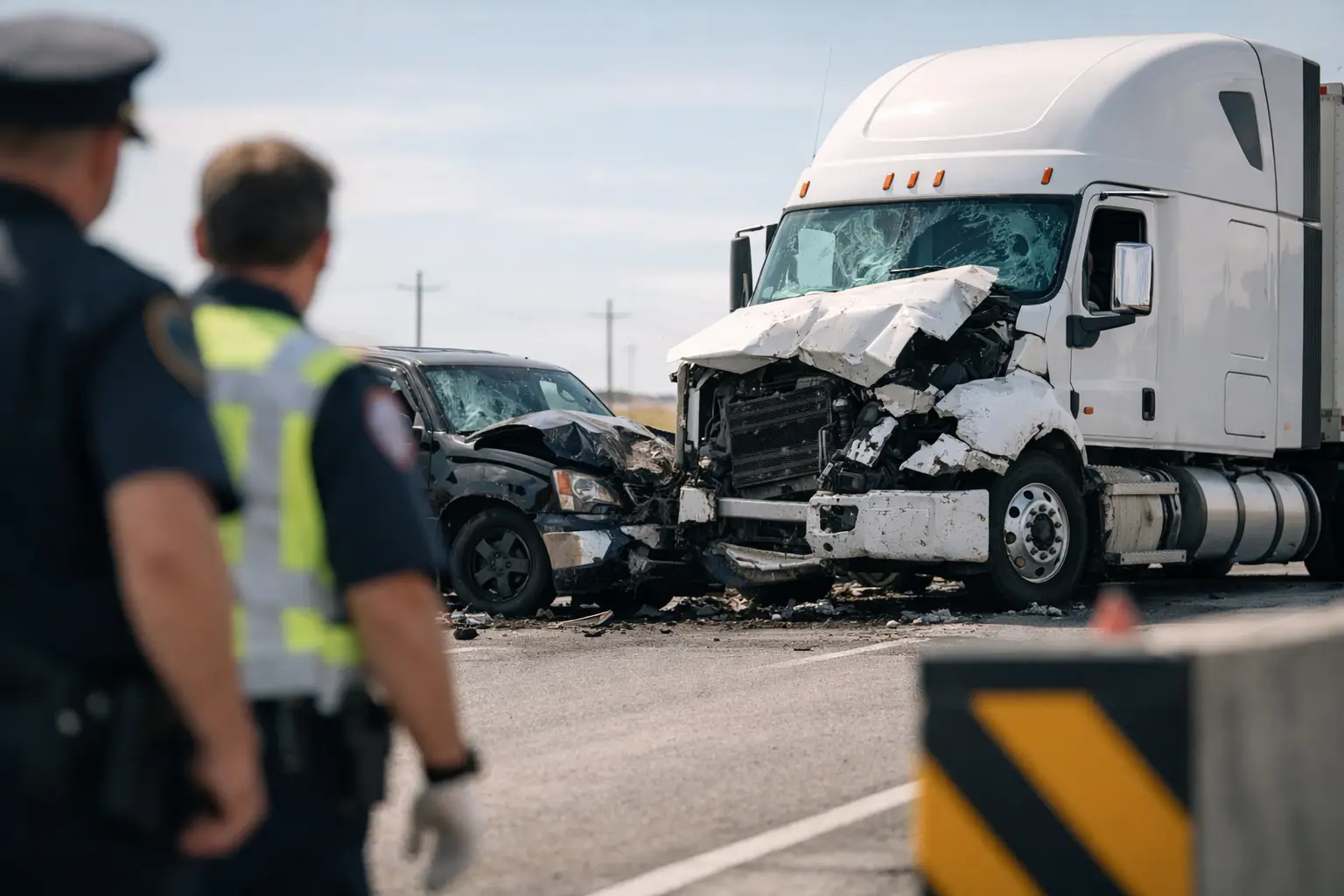

A truck crash is not just a bigger car wreck. The injuries are often more severe, the evidence disappears faster, and the trucking company’s insurer may move quickly to protect its own interests. If you are searching for how to handle truck crash claims after a serious collision in Texas, the first priority is simple: protect your health, protect the evidence, and do not let the other side control the story.
In the first hour after a crash, small decisions can affect both your medical recovery and your legal claim. If you can move safely, call 911 and ask for law enforcement and emergency medical help. Even if you think your injuries are minor, get checked. Victims in truck collisions often have delayed symptoms, especially with head injuries, neck injuries, internal trauma, and back damage.
If you are physically able, take photos and video of the vehicles, skid marks, cargo, road conditions, debris, license plates, company logos, and any visible injuries. Get names and contact information for witnesses. Do not argue with the truck driver about fault. Do not speculate about what happened. Give the police accurate basic facts and stick to what you know.
How to Handle Truck Crash Evidence From Day One
Truck accident cases are won or lost on evidence. A commercial truck may carry electronic data, driver logs, inspection records, maintenance files, dispatch communications, onboard video, and cargo records. Some of that evidence can be overwritten or lost if no one moves quickly.
That is one reason truck crashes are different from ordinary wrecks. In a passenger car case, the main dispute may be which driver had the green light. In a trucking case, the deeper question is often whether the company pushed an unsafe schedule, skipped maintenance, hired an unqualified driver, overloaded the trailer, or ignored federal safety rules.
As soon as possible, preserve everything in your own possession. Keep your damaged phone, your clothing, receipts, towing paperwork, discharge papers, prescription records, and photos. Start a simple journal that tracks pain levels, missed work, medical appointments, sleep problems, and daily limitations. That record can become important proof of how the crash changed your life.
An attorney can also send a preservation notice to stop the trucking company from destroying key records. That step matters because trucking companies and insurers usually know from the start that these claims can involve significant damages.
Get Medical Care Before the Insurance Company Defines Your Injuries
One of the most damaging mistakes after a truck wreck is waiting too long to seek treatment or failing to follow up. Insurance adjusters look for gaps in care. If you delay treatment, they may argue that you were not seriously hurt or that something else caused your condition.
Be direct with your doctors about every symptom. Mention headaches, dizziness, numbness, confusion, sleep issues, shoulder pain, and any emotional symptoms such as anxiety or flashbacks. Truck crashes can cause injuries that are not obvious at the scene. A clean adrenaline-fueled walk away does not always mean a clean bill of health.
Follow treatment recommendations unless a doctor changes the plan. If you miss appointments or stop care early because you hope to tough it out, the insurer may use that against you. Your medical record should reflect the real scope of your injuries, the treatment you need, and the impact on your work and daily life.
Be Careful With the Trucking Company’s Insurer
Soon after the collision, you may get a call from an insurance adjuster asking for a recorded statement. You are not required to give one to the other side’s insurer. In most cases, you should not.
Adjusters are trained to gather information that limits the value of a claim. A simple comment like “I’m okay” or “I didn’t see the truck until the last second” can be twisted later. The same is true for broad medical authorizations. If you sign paperwork without understanding it, you may give the insurer access to years of irrelevant medical history.
If your vehicle was totaled, there may also be pressure to settle the property damage issue fast. That can be fine in some cases, but do not assume a quick payment for the vehicle is the end of the matter. Injury claims are separate, and serious truck wreck injuries often take time to fully evaluate.
Who May Be Liable in a Truck Crash?
Many people assume the only possible defendant is the truck driver. That is not always true. In a serious commercial vehicle case, liability may extend beyond the person behind the wheel.
Depending on the facts, responsibility may involve the trucking company, a trailer owner, a maintenance contractor, a cargo loading company, a manufacturer of defective parts, or another driver whose conduct contributed to the crash. In some cases, the central issue is fatigue. In others, it is poor training, brake failure, distracted driving, intoxication, or a company policy that rewarded unsafe scheduling.
This is where experience matters. A truck crash claim is not only about proving a collision happened. It is about identifying every source of insurance coverage and every party that played a role in causing the harm.
How to Handle Truck Crash Claims When Fault Is Disputed
Texas follows modified comparative fault rules. That means your compensation can be reduced if you are found partly responsible, and barred entirely if you are more than 50 percent at fault. Because of that, insurers often try to shift blame early.
They may argue you changed lanes suddenly, stopped too fast, failed to signal, or were distracted. Sometimes there is a legitimate factual dispute. Sometimes it is a defense strategy built around limited evidence and selective statements.
The answer is not to argue louder. The answer is to build a stronger case. That may include crash scene analysis, black box data, witness interviews, cell phone records, toxicology evidence, driver qualification files, and hours-of-service records. When the injuries are serious, the facts need to be developed quickly and thoroughly.
Do Not Rush a Settlement
After a truck collision, financial pressure is real. Medical bills start arriving. Work may stop. A family may be trying to keep up with rent, childcare, or a mortgage while dealing with pain and uncertainty. Insurers know that.
An early settlement offer is not always fair just because it arrives quickly. Once a claim is settled, you usually cannot go back for more money later if the injury turns out to be worse than expected. That is especially dangerous with spinal injuries, traumatic brain injuries, surgeries, and long-term rehabilitation.
A fair claim should account for more than the emergency room bill. It may include future medical care, lost income, reduced earning ability, pain and suffering, physical impairment, disfigurement, and other damages recognized under Texas law. In fatal truck crashes, surviving family members may also have wrongful death and related claims.
When to Call a Truck Accident Lawyer
The short answer is early. If the crash involved serious injury, a fatality, a commercial trucking company, disputed fault, or pressure from an insurer, legal help should not wait.
A lawyer can investigate the wreck, preserve evidence, coordinate with experts, handle insurer communications, and measure the claim against the full extent of your losses. That gives you room to focus on treatment instead of trying to manage a high-stakes case while you are hurt.
For many injured Texans, that early step also changes the balance of power. The trucking company has professionals protecting its side from day one. You should too. The Buchanan Law Office, P.C. represents injured people and families in serious accident cases with that reality in mind.
Practical Steps You Can Take Right Now
If you are still figuring out how to handle truck crash fallout, keep your next moves simple and disciplined. Get medical care, follow your treatment plan, save every document, avoid recorded statements, stay off social media about the crash, and talk to counsel before accepting a settlement.
Social media deserves special mention. Photos, comments, and check-ins can be taken out of context. Even a smiling picture at a family event may be used to argue that you are not really injured. The safest move is to say nothing publicly while the claim is pending.
Serious truck crashes can leave people overwhelmed, angry, and unsure what to do next. That reaction is normal. What matters now is acting early enough to protect your case before evidence disappears and before an insurance company decides what your claim is worth. The right response after a truck wreck is not guesswork. It is prompt medical care, careful documentation, and strong legal protection when the stakes are high.









One Comment