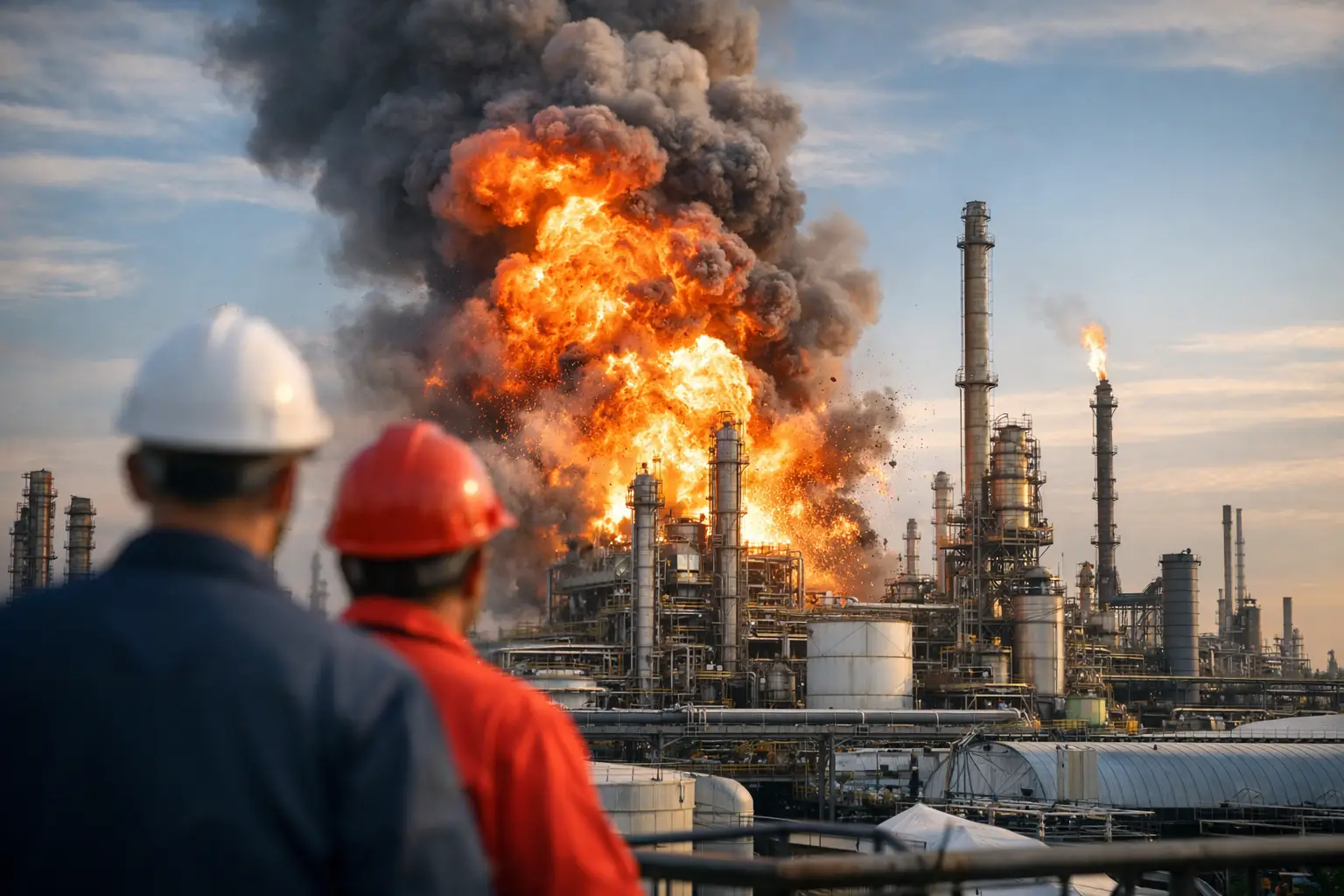

A refinery explosion can turn a routine shift into a life-changing emergency in seconds. Workers may suffer severe burns, blast injuries, toxic chemical exposure, or permanent disability. Families can lose a loved one without warning. Understanding the top causes of refinery explosions matters because these disasters are often preventable when companies follow safety rules, properly maintain equipment, and respond to known hazards.
Texas refineries handle volatile chemicals, extreme heat, pressurized systems, and heavy machinery every day. Those conditions create real risks, but danger is not the same as inevitability. When a refinery fire or explosion happens, investigators must determine whether unsafe decisions, neglected maintenance, defective equipment, or inadequate training played a role.
Why Refinery Explosions Happen
A refinery is a connected industrial system, not a collection of separate machines. A problem in one unit can affect pipelines, storage tanks, electrical systems, valves, and workers throughout the facility. Flammable vapors can travel beyond the point where a leak began, then ignite when they reach a heat source, spark, or damaged electrical component.
The cause of an explosion is rarely as simple as one worker making one mistake. Serious incidents often involve layers of failure: aging equipment that was not repaired, alarms that were ignored, procedures that were not followed, or production demands that took priority over safety. Identifying every contributing factor is critical after a catastrophic injury or wrongful death.
Top Causes of Refinery Explosions
Gas and Vapor Leaks
Refineries process hydrocarbons and other highly flammable substances. When gas, vapor, or liquid chemicals escape from a pipeline, pump, valve, flange, storage vessel, or processing unit, they can create an explosive atmosphere. A small leak may become deadly if it is not detected quickly or if vapors accumulate in an enclosed or poorly ventilated area.
Leaks can result from corrosion, cracked seals, damaged pipes, improper installation, excessive pressure, or equipment that has exceeded its safe service life. Companies are expected to inspect equipment, repair known defects, and use leak detection systems. If maintenance records show recurring leaks or prior warnings, those facts may be central to an injury claim.
Poor Maintenance and Aging Equipment
Industrial equipment operates under punishing conditions. Heat, pressure, vibration, chemical exposure, and constant use can weaken metal components and damage protective systems. Pumps, compressors, boilers, pressure vessels, piping, and relief valves require regular inspection and maintenance.
Deferred maintenance is a serious concern in refinery cases. A company may postpone repairs to avoid downtime or expense, even when employees have reported a recurring problem. That decision can put workers in danger. Maintenance contractors may also share responsibility if they performed repairs incorrectly or failed to identify obvious hazards.
Pressure Build-Up and Equipment Failure
Many refinery units operate under high pressure. If pressure is not controlled, a vessel, pipe, or processing unit can rupture. The release of pressurized flammable material may lead to a fireball, blast wave, or secondary explosions.
Pressure-relief systems, control valves, sensors, and emergency shutdown mechanisms are supposed to prevent this outcome. When those safeguards fail, investigators must ask why. The issue may be a faulty component, improper calibration, poor maintenance, inadequate procedures, or a design defect in the equipment itself.
Ignition Sources Near Flammable Materials
A fuel or vapor release does not always cause an explosion by itself. It needs an ignition source. In a refinery, that source can be welding work, cutting, open flames, overheated equipment, static electricity, electrical arcs, sparks from tools, or even a vehicle operating too close to a vapor cloud.
Hot work is particularly dangerous. Before welding, grinding, or torch cutting begins, the area should be evaluated for flammable gases and isolated when necessary. Permits, gas testing, fire watches, and clear communication are not paperwork for its own sake. They are safety measures intended to prevent workers from being caught in a flash fire or explosion.
Unsafe Shutdowns, Startups, and Process Changes
Refineries can be especially hazardous during maintenance shutdowns, restarts, and changes in production. Lines may be opened, equipment may be isolated, contractors may enter the facility, and normal operating conditions may be disrupted. These periods require careful planning and clear procedures.
An incomplete lockout, an improperly closed valve, a misidentified line, or a rushed startup can release dangerous pressure or chemicals. Workers should receive specific instructions about changed conditions and emergency procedures. When management cuts corners during turnaround work or startup operations, the consequences can be catastrophic.
Inadequate Training, Staffing, and Supervision
Refinery workers and contractors must understand the hazards of their assignment, the equipment they are using, and the emergency actions required if something goes wrong. Training must be meaningful, current, and provided in a way workers can understand. A quick orientation cannot substitute for job-specific safety instruction.
Staffing also matters. Fatigue, long shifts, understaffed control rooms, and inexperienced crews can increase the chance that warning signs will be missed. Supervisors have a responsibility to stop work when conditions are unsafe. A worker should never be pressured to continue a task that violates safety procedures or places the crew at unnecessary risk.
Defective Equipment and Dangerous Products
Not every refinery explosion is solely the facility operator’s fault. A defective valve, sensor, control system, pump, pressure vessel, or electrical component can fail despite appropriate use and maintenance. Equipment manufacturers, distributors, and companies responsible for installation may be legally accountable when a dangerous product contributes to an explosion.
Product liability claims can be complex because damaged equipment may be removed, repaired, or discarded soon after an incident. Preserving evidence quickly can make a major difference. Photographs, inspection reports, failed components, electronic data, and maintenance history may help establish what went wrong.
Warning Signs That Should Never Be Ignored
Workers often notice danger before a major event occurs. The smell of gas or chemicals, repeated alarm activations, visible leaks, unusual vibrations, pressure fluctuations, corroded pipes, malfunctioning gauges, and recurring equipment problems deserve immediate attention. So do reports that safety systems have been bypassed or that workers are being told to keep operating despite a known defect.
Employees may worry about retaliation for reporting hazards. But a refinery operator’s production schedule does not outweigh a worker’s right to a reasonably safe workplace. Written complaints, text messages, shift logs, and reports to supervisors can become important evidence if a serious incident follows. Workers should document concerns when they can do so safely, but they should never remain in an area they reasonably believe is dangerous just to gather proof.
What to Do After a Refinery Explosion
Medical care comes first, even if injuries seem minor. Blast exposure can cause concussions, hearing loss, internal injuries, lung damage, and post-traumatic stress symptoms that do not fully appear right away. Follow-up treatment also creates records that can help show the true extent of harm.
If possible, preserve information related to the incident. Keep photographs of injuries and damaged personal property, discharge paperwork, work schedules, pay records, names of witnesses, and any communications from the employer or contractor. Do not sign a release, recorded statement, or settlement document without understanding what rights you may be giving up.
In Texas, an injured refinery worker may have more than one potential claim. Workers’ compensation may be available in some circumstances, but it may not fully cover the losses caused by a catastrophic injury. A third-party claim may exist against a negligent contractor, equipment manufacturer, property owner, maintenance company, or another responsible business. The available options depend on the facts, the employer’s insurance status, and the parties involved.
Getting Answers and Protecting Your Claim
After an explosion, the company and its insurers may begin their own investigation immediately. Their focus may include limiting liability and protecting corporate interests. Injured workers and grieving families deserve someone focused on protecting theirs.
A knowledgeable refinery explosion attorney can move quickly to preserve evidence, review safety records, identify responsible parties, and calculate damages that go beyond immediate medical bills. Those damages may include lost income, reduced earning capacity, pain and suffering, disfigurement, long-term care, and wrongful death losses.
The Buchanan Law Office, P.C. represents Texans harmed by serious industrial accidents and helps families pursue accountability when negligence causes preventable harm. If a refinery explosion has disrupted your life, get legal guidance early. The right investigation can protect evidence, clarify your options, and help you focus on recovery while your legal rights are being pursued.