
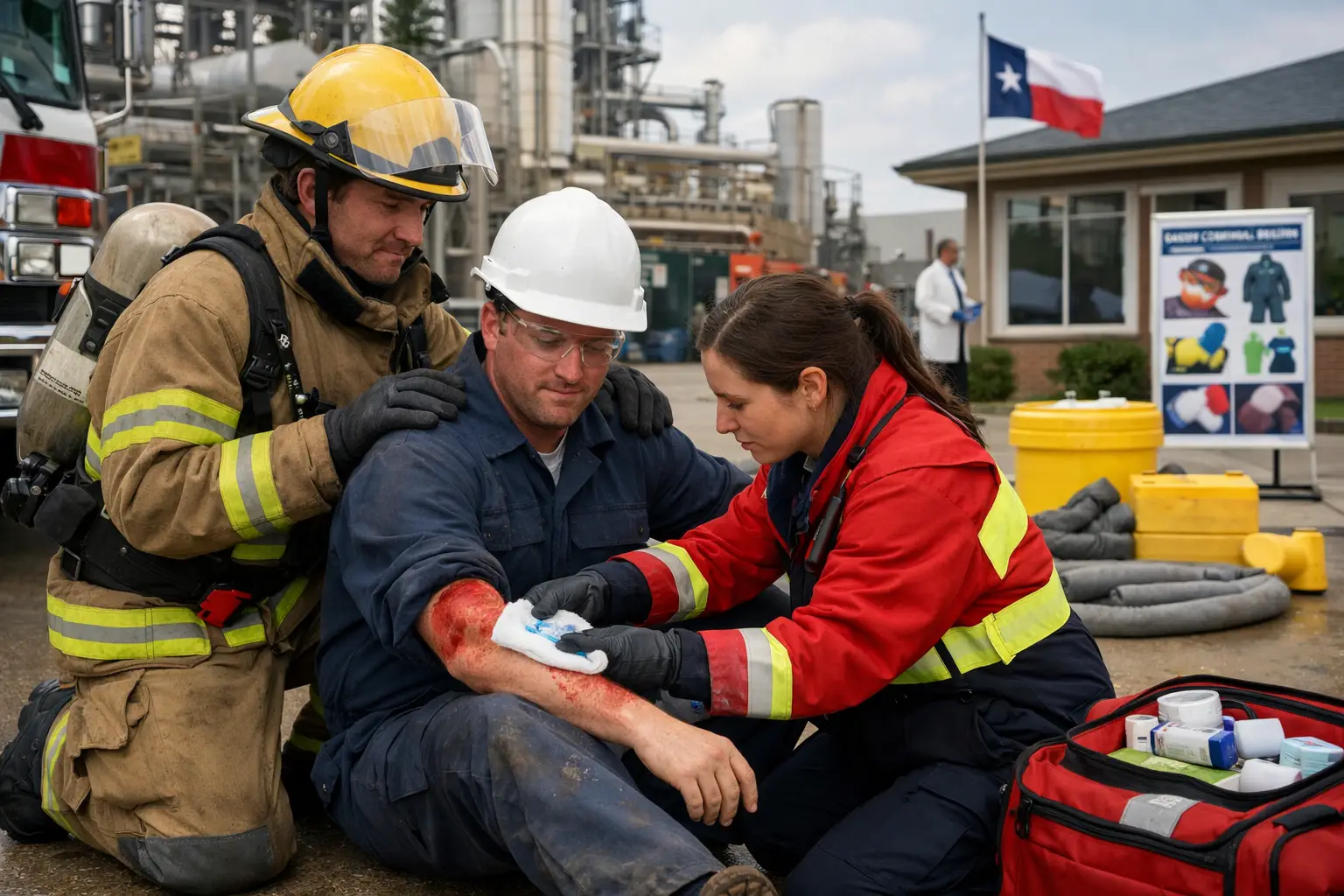

A burn injury at a chemical plant can change your life in seconds. One flash fire, steam release, caustic spill, or explosion can leave a worker facing emergency care, lost income, painful recovery, and hard questions about who is responsible. This chemical plant burn injury guide is written for Texas workers and families who need clear answers fast.
What makes chemical plant burn injuries different
Plant burns are not always simple thermal burns. In a chemical facility, a worker may suffer heat burns from fire, chemical burns from corrosive substances, inhalation injuries from toxic smoke, or a combination of all three. That matters because the medical treatment, long-term risks, and legal issues can be very different.
A chemical burn may keep damaging tissue until the substance is fully removed. An inhalation injury can be life-threatening even when the skin burns appear limited. Electrical burns can damage muscles and organs beneath the surface. In serious incidents, the visible injury is only part of the problem.
These cases also tend to involve multiple layers of responsibility. A plant owner, contractor, maintenance company, equipment manufacturer, or chemical supplier may all have played a role. That is one reason injured workers should not assume there is only one path to recovery.
Chemical plant burn injury guide: what to do first
The first priority is medical care. Get emergency treatment right away, even if the burn does not seem severe at first. Burns can worsen over time, and some exposures cause delayed symptoms. Follow medical instructions closely and attend every recommended appointment.
After the immediate emergency, documentation becomes critical. Report the incident to your employer as soon as possible. If you are physically able, write down what happened while the details are fresh. Note the date, time, exact location, equipment involved, chemicals involved if known, and the names of any witnesses.
Photos can matter. If it is possible to do so safely, preserve images of the scene, damaged equipment, visible injuries, and any protective gear involved. Keep your boots, gloves, clothing, and helmet if they may show evidence of the incident. Do not wash away or throw out items that could later help prove what happened.
You should also be careful about giving detailed recorded statements before you understand your rights. In major industrial injury cases, companies and insurers often begin building their defense immediately. What seems like a routine request for information may later be used to minimize your claim.
Why burn injuries at chemical plants happen
Most serious plant burns are not random events. They often trace back to preventable failures in safety systems, maintenance, training, supervision, or hazard control. A valve may fail. A line may be opened without proper isolation. A contractor may be sent into a dangerous area without full hazard communication. Protective equipment may be defective or inadequate for the task.
In some cases, the problem is process safety management. In others, it is poor lockout and tagout procedures, delayed maintenance, bad turnaround planning, or a failure to address known risks. Staffing shortages and production pressure can also contribute. When a company cuts corners in a high-hazard environment, workers pay the price.
That does not mean every case is straightforward. Some incidents involve overlapping causes. One worker’s injury may result from a chain of failures involving several companies on the site. A proper investigation looks at the full picture, not just the explanation offered in the first incident report.
Medical issues that can affect the value of a claim
A severe burn is rarely a short-term injury. Treatment may include hospitalization, skin grafts, infection control, pain management, respiratory care, rehabilitation, and reconstructive procedures. Some workers develop permanent scarring, nerve damage, limited mobility, chronic pain, or psychological trauma.
Burn injuries can also affect a person’s ability to return to refinery or plant work. Heat exposure, physical demands, restricted movement, respiratory limitations, and disfigurement may all change future employment options. A worker who cannot return to the same job may face a major drop in earning capacity.
That is why a burn claim should account for more than the initial hospital bill. Future surgeries, therapy, wage loss, reduced earning ability, disfigurement, physical impairment, and mental anguish may all be part of the damages analysis. In fatal cases, surviving family members may have wrongful death and survival claims.
Workers’ compensation is not always the full answer
Many injured workers assume workers’ compensation is the only remedy after a chemical plant burn. In Texas, that is not always true. Texas is unusual because some employers do not carry workers’ compensation coverage, and even when coverage exists, there may still be a claim against a third party.
If your employer is a subscriber to workers’ compensation, benefits may cover medical treatment and a portion of lost wages, but they do not provide damages for pain and suffering. If a negligent third party caused or contributed to the incident, you may have a separate personal injury claim.
If your employer is a nonsubscriber, the legal situation can be very different. A nonsubscriber employer may be directly liable for negligence, and the defenses available to that employer are often more limited than people realize. The facts matter, and early legal review matters too.
Who may be liable after a chemical plant burn
Liability in a plant burn case often extends beyond the direct employer. A property owner may have failed to maintain safe premises. A general contractor may have created unsafe work conditions. A subcontractor may have performed dangerous work improperly. A manufacturer may have supplied defective equipment, valves, alarms, pumps, respirators, or protective clothing.
There are also cases involving unsafe chemicals, poor labeling, inadequate warnings, or failures in emergency shutdown systems. If a company knew about a hazard and failed to correct it, that can become powerful evidence. If inspection records, maintenance logs, or prior incident reports show a pattern of neglect, that can strengthen a claim significantly.
The key point is simple. Do not let anyone rush you into believing this was just an accident before the evidence is fully examined.
Evidence can disappear quickly
Chemical plant injury cases move fast after a major event. Cleanup begins. Equipment is repaired or replaced. Witnesses are interviewed. Internal reports are drafted. Corporate representatives and insurers often start protecting the company’s position within hours.
That is why it is smart to speak with a lawyer early. A strong legal team can move to preserve evidence, identify responsible parties, secure records, and keep critical facts from being lost. Waiting too long can make a serious case much harder to prove.
This is especially true in Houston-area industrial cases where multiple companies may be operating at the same site. Contracts, indemnity provisions, maintenance records, and safety responsibilities can become complicated fast. A prompt investigation helps sort out who controlled what and when.
When to call a lawyer
If your burn required emergency treatment, surgery, hospitalization, time off work, or follow-up care, it is time to get legal advice. If there was an explosion, fire, pressure release, toxic exposure, or equipment failure, it is time to get legal advice. If a family member died from a plant incident, it is time to get legal advice immediately.
You should also call if the employer or insurer is pushing for a fast statement, disputing how the incident happened, blaming the worker, or acting as though the injuries are minor. Those are warning signs. Serious burn cases deserve serious representation.
The Buchanan Law Office, P.C. handles high-stakes injury claims involving industrial accidents and plant burns. For injured workers and families, getting counsel involved early can relieve pressure and help protect the right to full compensation.
What compensation may be available
The value of a chemical plant burn claim depends on the severity of the injury, the medical outlook, the wage loss, and the available defendants and insurance coverage. In the right case, compensation may include medical expenses, future medical care, lost wages, reduced earning capacity, pain and suffering, mental anguish, physical impairment, and disfigurement.
For families who have lost a loved one, damages may also include funeral expenses, loss of financial support, and loss of companionship. Every case is fact-specific. A minor burn with a quick recovery is different from a life-altering injury involving grafts, permanent scarring, and inability to return to industrial work.
That is also why quick settlement offers should be viewed carefully. Early offers may arrive before the true medical picture is clear. Once a claim is settled, you usually do not get a second chance to ask for more when additional surgeries or complications arise.
A serious plant burn case is about more than paperwork. It is about protecting your health, your income, and your future while the facts are still fresh and the evidence can still be preserved. If you or your family are dealing with the aftermath of a chemical plant burn, get answers early and make decisions from a position of strength, not pressure.









One Comment