
After a serious collision, video evidence can answer the question everyone else may be trying to avoid: what really happened? If you need to know how to get crash footage, move quickly. Many cameras automatically record over old video within days or weeks, and the business, driver, or government agency holding the footage may have no reason to preserve it unless they receive prompt notice.
For an injured person or grieving family, obtaining video is not just about curiosity. Footage may show a driver running a red light, drifting across lanes, following too closely, speeding, using a phone, or failing to yield. In a trucking crash, it may reveal unsafe lane changes, unsecured cargo, driver fatigue, or a company vehicle traveling too fast for conditions. It can also expose what happened immediately after impact.
How to Get Crash Footage: Act Before It Is Deleted
The first priority is identifying every possible camera near the crash site. Think beyond traffic lights. Nearby homes may have doorbell cameras. Stores, gas stations, apartment complexes, banks, schools, warehouses, parking lots, and construction sites often use surveillance systems. Other drivers may have dashcams, and rideshare or delivery vehicles may have onboard cameras.
Return to the area as soon as your medical condition allows, preferably with someone you trust. Make notes about where the crash occurred, the direction each vehicle was traveling, and every building or intersection that may have had a view of the road. Take photographs of visible cameras and write down business names, street addresses, and contact information.
Do not assume a camera facing the building was useless. A camera positioned at an entrance, driveway, parking lot, or side wall may have captured the impact, a vehicle approaching the crash, or the other driver leaving the scene.
Ask for Preservation, Not Just a Copy
You can politely ask a business owner, property manager, homeowner, or security supervisor whether their cameras captured the incident. If footage exists, ask that it be preserved immediately. Be specific about the date, approximate time, location, and the direction of travel involved.
Still, a verbal request is not enough in a high-stakes injury claim. Employees change shifts, video systems overwrite footage, and a person who says they will help may not control the recordings. A written preservation request creates a record that the owner was informed the evidence may be relevant to a legal claim.
An attorney can send a formal preservation letter, sometimes called a spoliation letter, to the parties who may possess evidence. The letter can request that they preserve defined video, photographs, vehicle data, driver logs, maintenance records, communications, and other materials connected to the crash. It does not guarantee the recipient will voluntarily hand everything over, but it puts them on notice that destruction of relevant evidence may have consequences.
Contact Law Enforcement and Request Available Records
Police officers sometimes use body-worn cameras, dash cameras, or in-car video systems. Depending on the agency and circumstances, video may have captured the scene, witness statements, the condition of the vehicles, field sobriety testing, or admissions made by a driver after the collision.
Request the crash report promptly and confirm which law enforcement agency responded. In Texas, the crash report can help identify involved drivers, witnesses, responding officers, vehicle owners, insurers, and the reported location and time of the collision. It may not include video, but it gives you a starting point for locating it.
Government-held video can involve public-records rules, privacy concerns, and exceptions that limit what an agency will release. Do not wait for an insurer to handle this for you. Your own insurance company and the at-fault driver’s insurer are not working to build your injury case. If footage matters, take steps to preserve it while records requests are pending.
Look for Traffic and Intersection Cameras
A traffic camera is not always a recording camera. Some cameras provide live monitoring only. Others capture images at intervals, while some systems retain footage for a limited period. The city, county, state, toll authority, or a private contractor may operate the equipment.
That is why exact location matters. Record the nearest intersection, cross streets, highway mile marker, frontage road, lane of travel, and nearby landmarks. A vague request for video from a major Houston roadway may be difficult to process. A precise request tied to a known timeframe is much stronger.
If the crash involved a commercial truck, bus, municipal vehicle, or construction vehicle, additional cameras may exist. Fleet vehicles can have forward-facing or driver-facing cameras. Companies may also keep GPS information, electronic logging device data, dispatch messages, inspection reports, and telematics data. Those records can disappear or be overwritten just as quickly as video.
Preserve Evidence From Your Own Vehicle and Phone
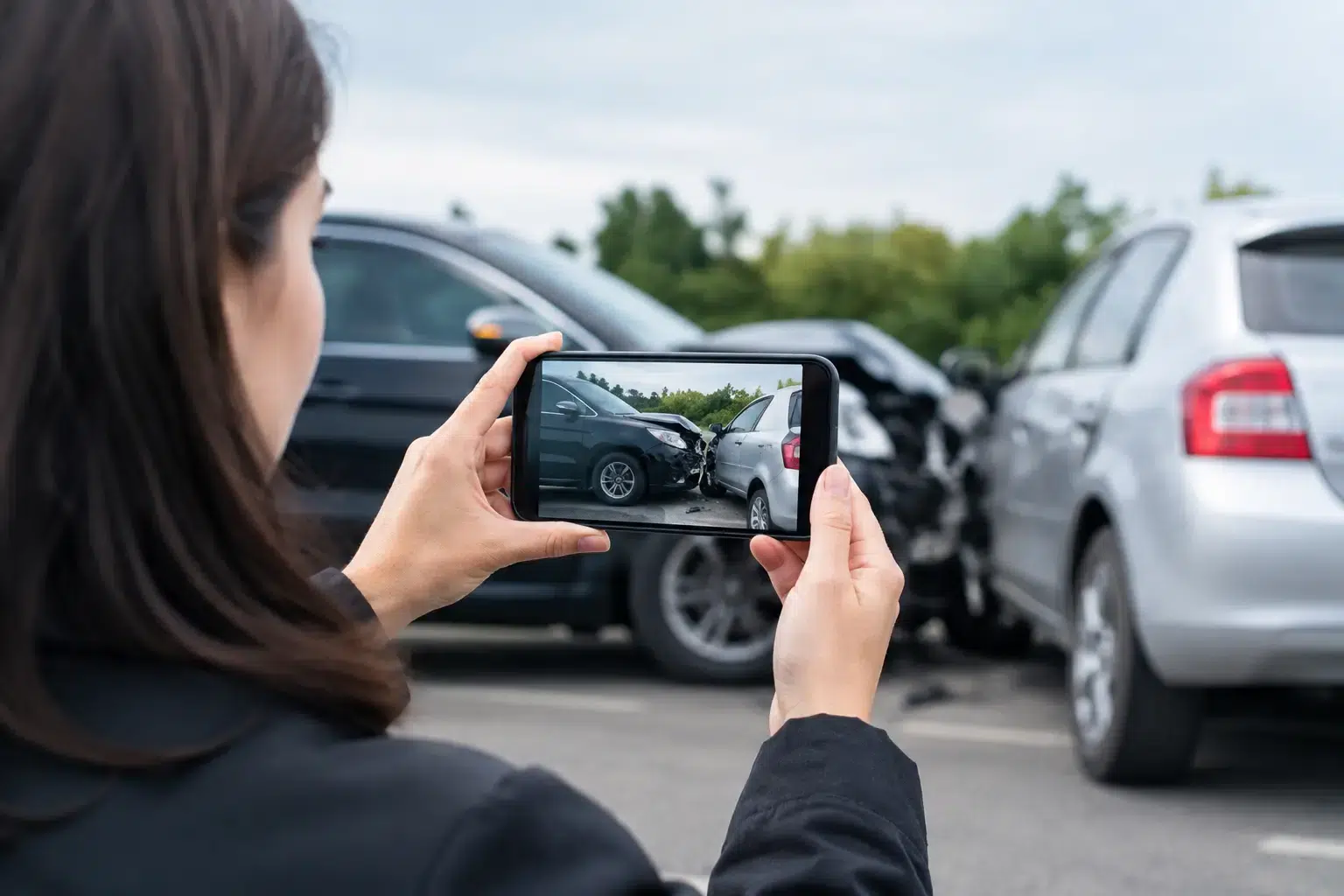
Your own devices can contain valuable evidence. Save original photos and videos from the scene, including wide shots of the intersection, roadway debris, skid marks, vehicle damage, weather, and nearby businesses. Do not edit the original files. Editing, cropping, adding filters, or sending only screenshots can remove useful metadata and create questions about authenticity.
Check whether your vehicle, phone, or a passenger’s phone recorded anything automatically. A dashcam may save footage to a memory card that can be overwritten once the vehicle is driven again. Some newer vehicles store limited event data, though the type of information available depends on the vehicle and equipment.
Back up your files in more than one place. Keep the original device and memory card safe. Write down who took each photo or video and when it was taken. This simple documentation can make it easier to establish that the evidence is genuine later.
Be careful about social media. Do not post crash videos, speculate about fault, argue with the other driver, or discuss your injuries publicly. Insurance companies look for posts they can use to challenge the severity of a claim or suggest that your account has changed. Let the evidence speak through the proper process.
Get Witness Footage and Contact Information
Witnesses often leave with more than a statement. They may have taken photos, recorded video, or captured the aftermath on a dashcam. A person stopped at a red light or standing in a parking lot may have a clearer view than any fixed camera.
If you are at the scene and physically able, ask witnesses for their names, phone numbers, and email addresses. Ask whether they recorded anything. If you were transported for medical treatment, review the police report and contact listed witnesses as soon as possible. Be respectful, direct, and brief. People are more likely to cooperate when they understand the request concerns a specific accident and a limited timeframe.
Do not pressure witnesses to change their account. Their independent observations are valuable precisely because they are independent.
Why Crash Footage Can Change an Injury Claim
Video can protect you when the other driver denies responsibility or gives a different version of events. It may establish the sequence of impact, vehicle positions, traffic signals, road conditions, and post-crash conduct. In cases involving catastrophic injuries or wrongful death, those details can affect liability, available insurance coverage, and the full value of the claim.
But footage is not always decisive on its own. A camera angle may miss a traffic light, obscure a lane, lack audio, or capture only a few seconds. A defense lawyer or insurer may argue that the video is incomplete. Strong cases use video alongside physical evidence, witness testimony, vehicle damage analysis, medical records, phone data, and, where applicable, trucking-company records.
That is also why early legal help matters. Once an insurance company has shaped the narrative around a crash, it becomes harder to recover lost evidence and correct inaccurate assumptions. A plaintiff-side lawyer can investigate while evidence is still available, communicate with insurers, and take formal legal action when a responsible party refuses to cooperate.
Do Not Delay Because You Feel Overwhelmed
After a crash, medical care comes first. Get evaluated, follow your treatment plan, and keep records of your symptoms, expenses, missed work, and limitations. Then protect the evidence. A family member can photograph nearby cameras, collect names, or help make calls while you focus on recovery.
If you or someone you love was seriously injured in a Texas car, truck, workplace, or industrial accident, the Buchanan Law Office can assess what evidence may exist and take steps to pursue accountability. There are no upfront attorney fees for a contingency-fee injury case.
The practical rule is simple: treat every hour after a crash as an opportunity to preserve proof. Footage may be gone tomorrow, but timely action can keep the facts from disappearing with it.